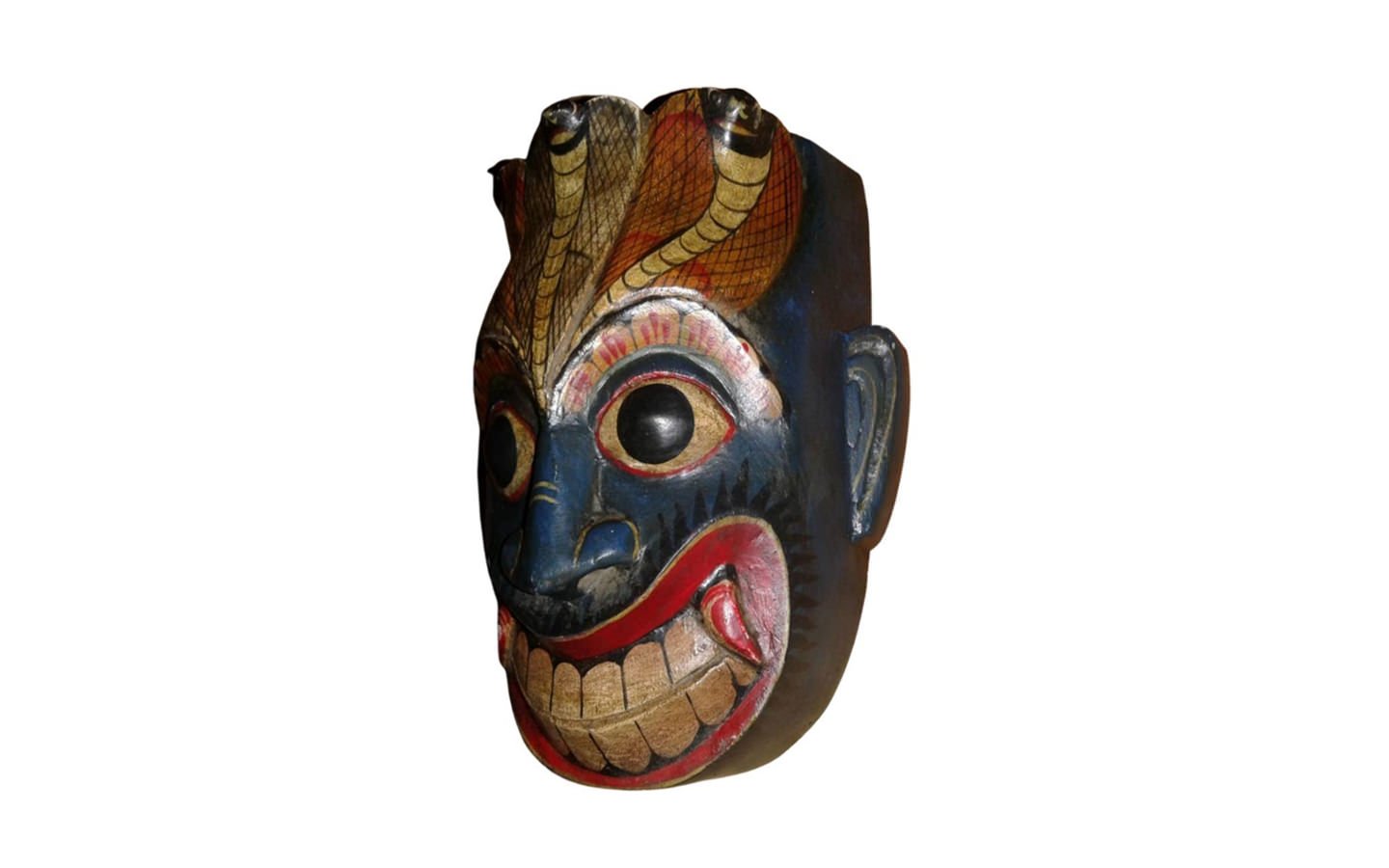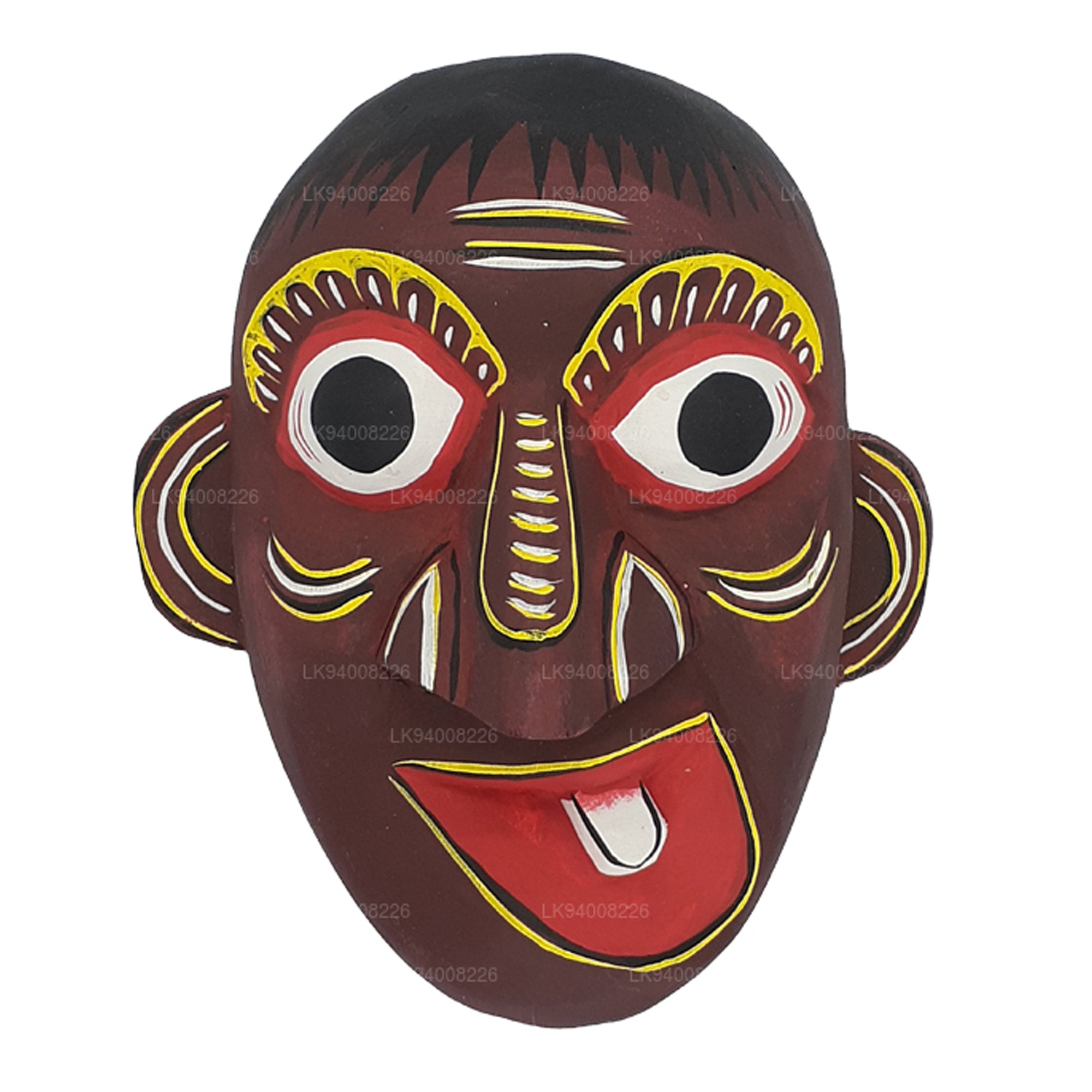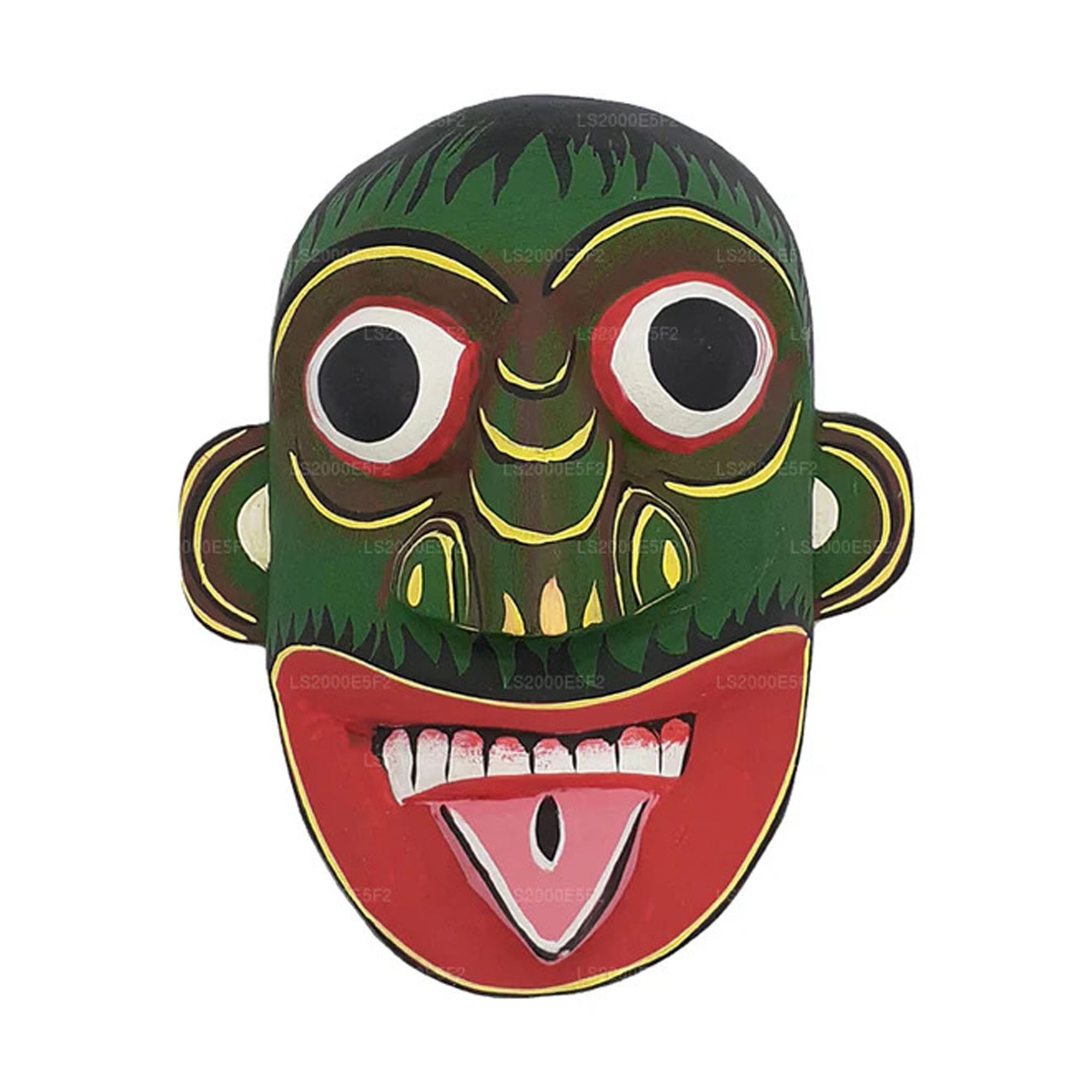
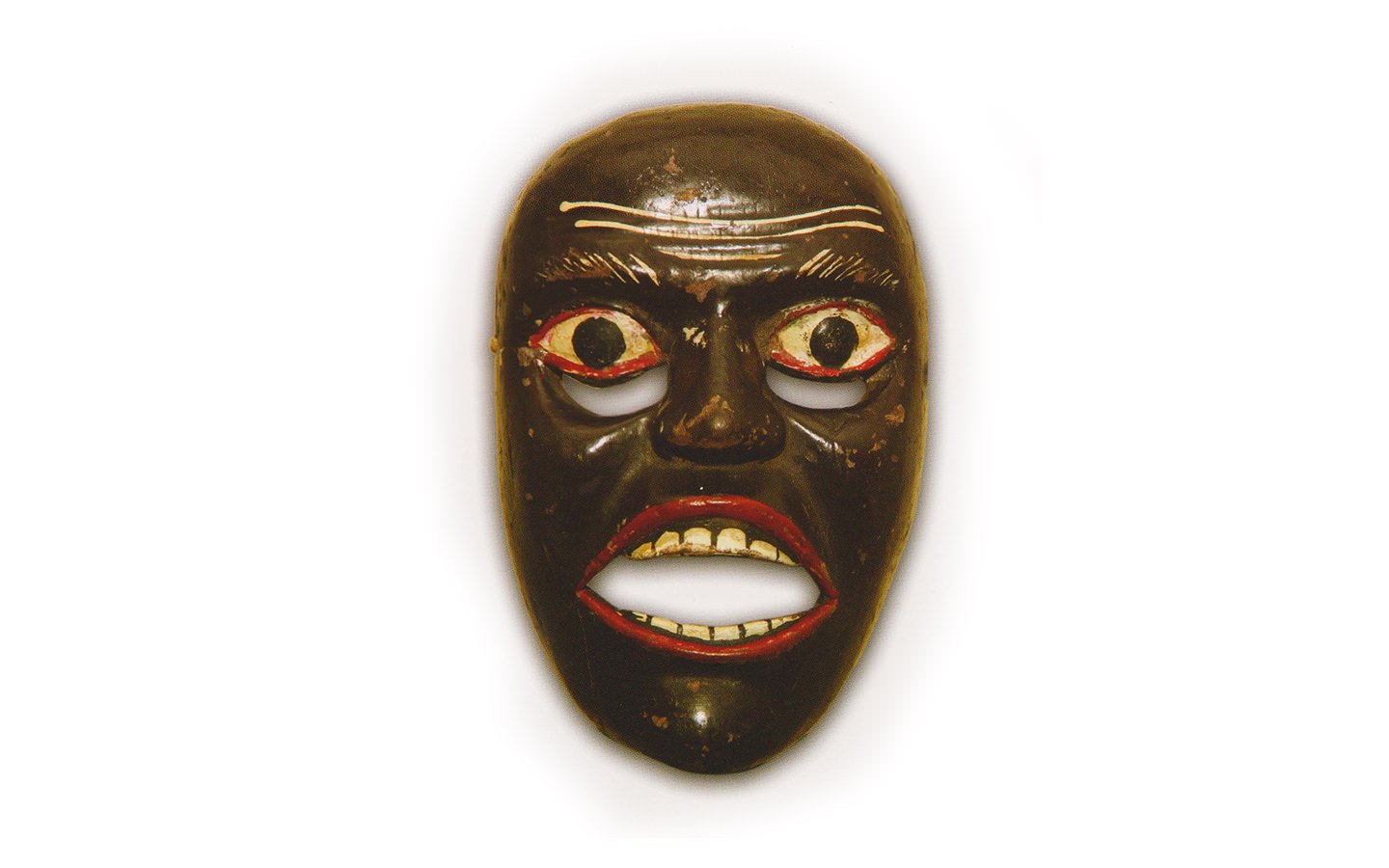
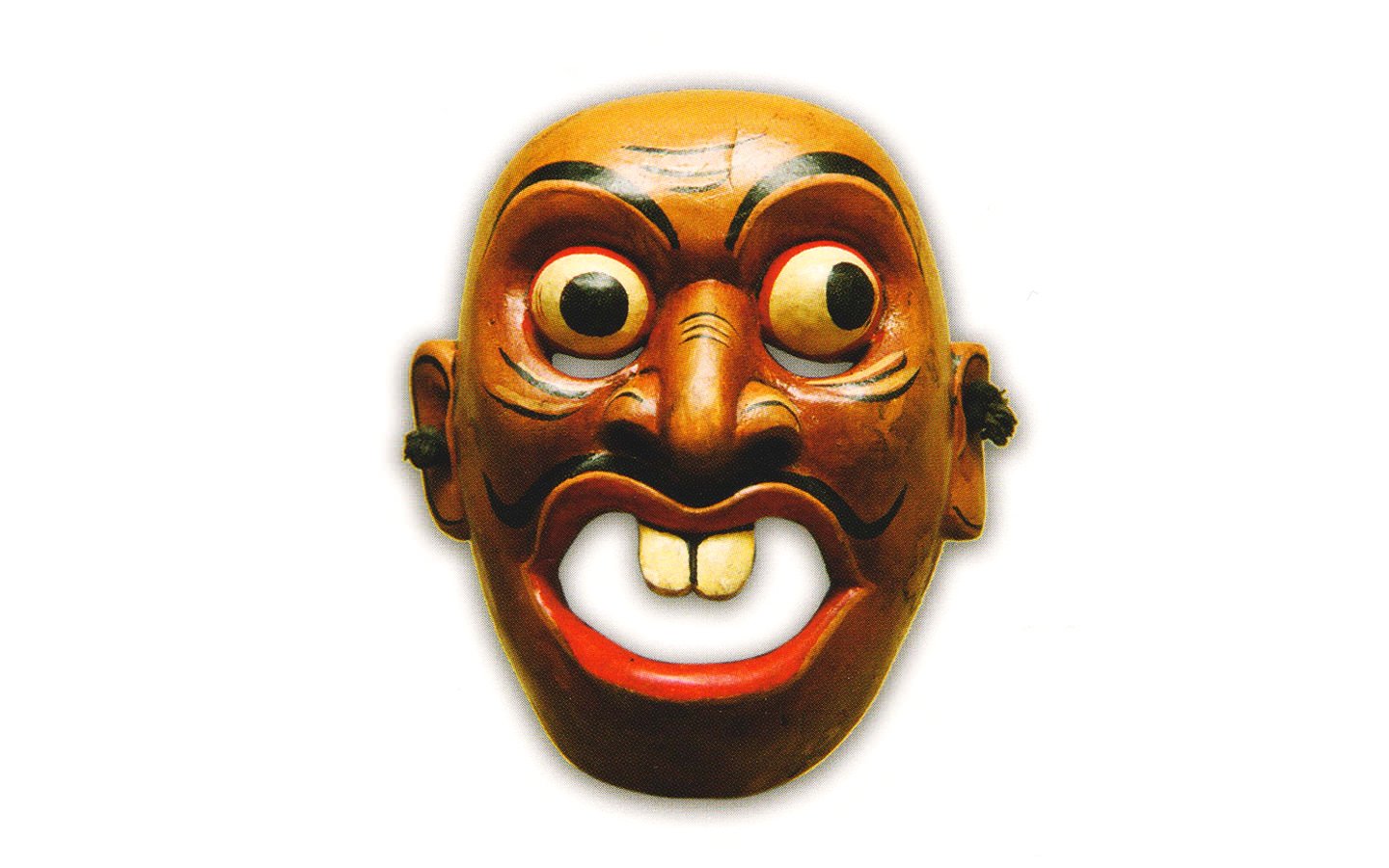

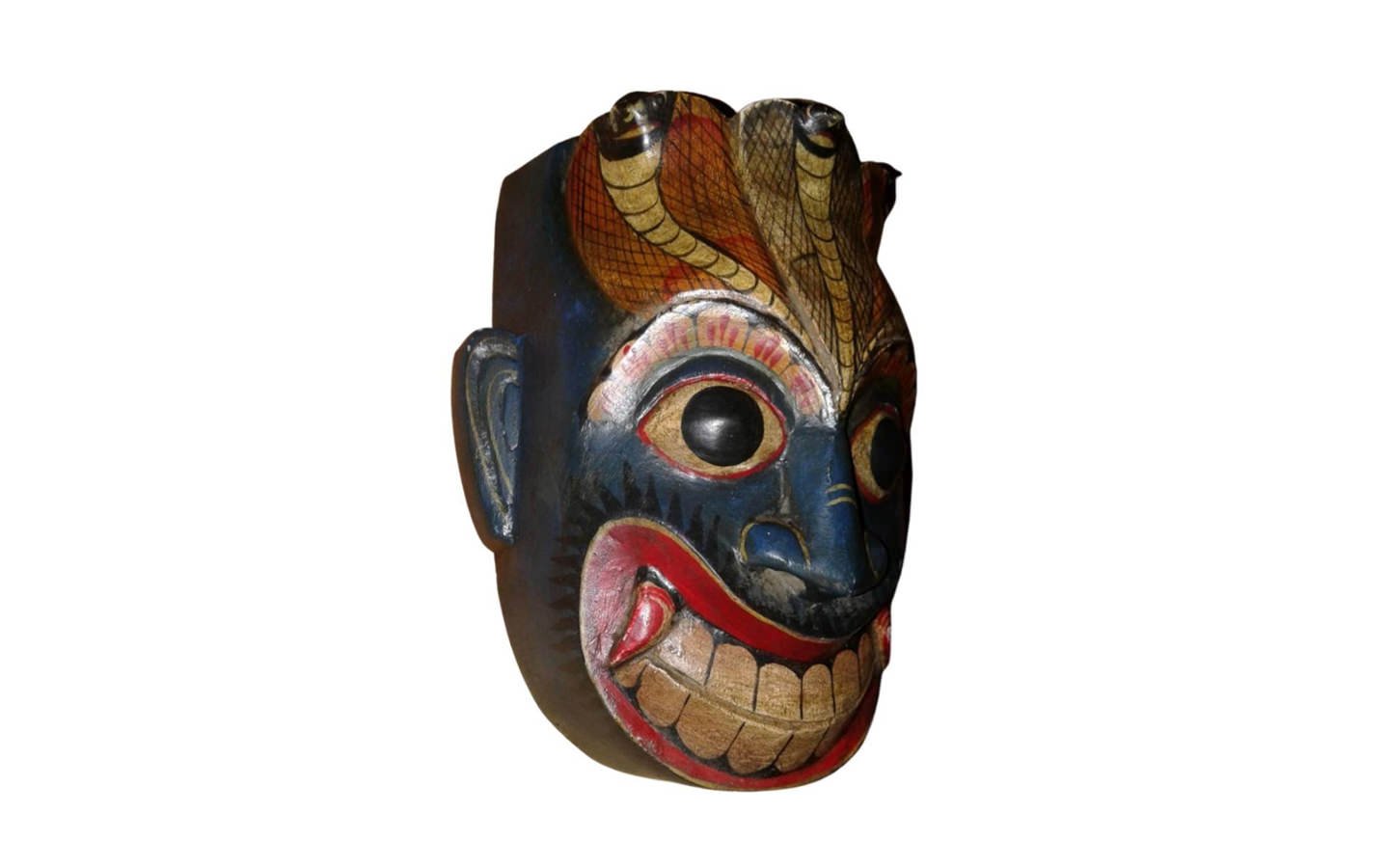
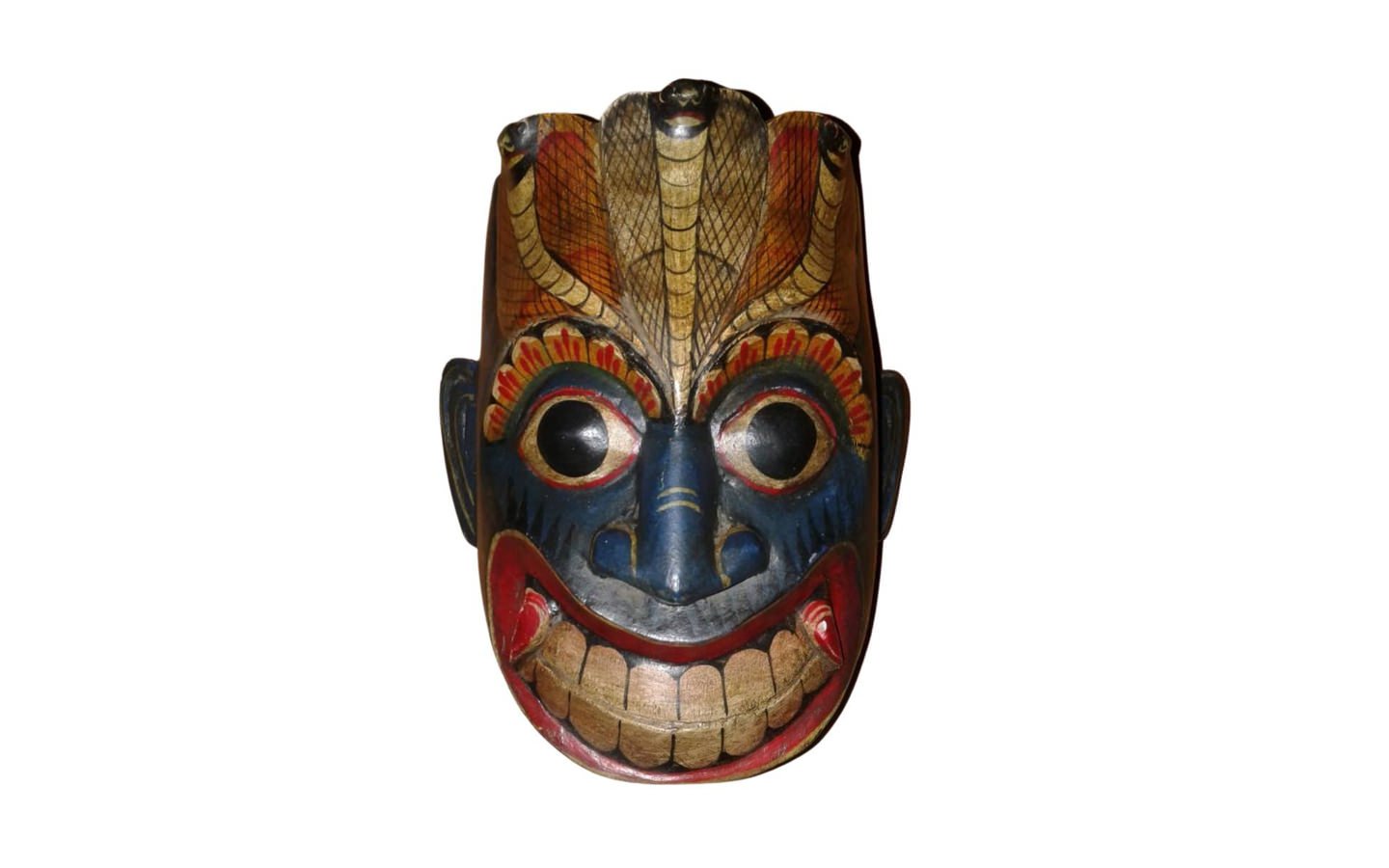
In the ceremonial tradition of Sri Lankan Sanni Yakuma, eighteen demon spirits are believed to afflict the human body and mind with specific ailments. Each spirit is given a face — a carved and painted mask — and Jala Sanniya, also known as Seethala Sanniya, is one of the most visually and symbolically distinct among them. Associated with cold, water, and fever caused by chills, this mask occupies a defined place within a ritual healing system that has been practised along the southwestern coast of Sri Lanka for centuries.
What is Jala Sanniya and what does it represent?
The word jala (ජල) means water in Sinhala, and seethala (සීතල) means cold or chilled. Together, the two names point to the same demon: a spirit thought to induce fevers, shivering, and ailments linked to excessive cold or dampness in the body. Within the Daha-Ata Sanniya — the collective of eighteen Sanni demons — Jala Sanniya represents the elemental power of water turned malevolent through imbalance.
Traditional belief holds that when a person suffered from persistent cold-related illness, the community would commission a thovil or yakuma ceremony. A skilled mask dancer, wearing the Jala Sanniya mask and costume, would enact the demon's arrival, negotiation, and departure, symbolically releasing the patient from the spirit's grip. The mask is therefore not merely decorative — it is a ritual instrument with a specific therapeutic purpose.
How does Jala Sanniya fit into the Sanni Yakuma ceremony?
The Sanni Yakuma is a nocturnal exorcism ritual performed by a yakaduru (ritual specialist) and a troupe of drummers and dancers. The ceremony unfolds in a prescribed sequence, with each of the eighteen Sanni demons summoned, appeased, and dismissed in turn. Jala Sanniya typically appears amid the middle passages of the ritual, representing the watery, cooling imbalance that contrasts with fire-associated demons elsewhere in the sequence.
Offerings of coconut milk, cooling foods, and specific flowers are placed before the Jala Sanniya effigy during the rite. The accompanying drumming pattern — played on the yak bera — shifts in tempo as the dancer embodies the spirit, mimicking the shivering and erratic movement associated with a fever chill. Audiences are participants, not spectators: their presence and collective intention are considered essential to the ritual's efficacy.
What does the Jala Sanniya mask look like?
Sanni masks are carved from the wood of the kaduru tree or similar lightweight timber, then layered with paint in bold white, red, and black. Jala Sanniya's mask tends to be characterised by a pale or bluish-white complexion — evoking the pallor of cold — with wide, staring eyes, an exaggerated open mouth, and sometimes stylised water-drop or wave motifs worked into the headdress.
The craftsmanship traces a lineage through the coastal communities of the Southern Province, particularly around Ambalangoda, which has been the heartland of Sri Lankan mask carving for generations. Masks produced for ceremonial use are consecrated before they are worn; those made for sale as collector pieces follow the same aesthetic conventions but are not ritually activated.
Where can you see Sanni Yakuma performed in Sri Lanka?
Authentic Sanni Yakuma performances are commissioned privately, usually in villages of the Southern and Western provinces, and are not scheduled tourist events. However, cultural centres and museums — especially in Ambalangoda and at Colombo's national museums — display complete sets of Sanni masks and provide contextual information about the ritual cycle. Periodic public demonstrations are organised during cultural festivals and academic events.
If you are travelling the south coast, the Ambalangoda Mask Museum offers one of the most comprehensive collections of Sanni masks in the country, presented alongside explanatory panels on each demon's identity and role. The Esala Perahera Festival in Kandy, while focused on a different ritual tradition, illustrates the broader landscape of Sri Lanka's performance-based ceremonial culture and is accessible to visitors.
What is the significance of Sanni masks as art and craft objects?
Beyond their ritual function, Sanni masks have become one of the most recognised forms of traditional Sri Lankan craft. A full set of eighteen masks — the Daha-Ata Sanniya — is a substantial collector's piece representing months of skilled carving and painting. Individual masks, including Jala Sanniya, are widely collected both within Sri Lanka and internationally, valued for the precision of their iconography and the vibrancy of their polychrome finish.
Government-recognised craft institutions and private ateliers in Ambalangoda produce masks at various price points and levels of detail. When purchasing, it is worth asking whether the carver follows the traditional iconographic conventions — dimensions, colour assignments, and facial expressions for each demon are not arbitrary but are codified by generations of practice. A mask that deviates significantly from convention is more likely a decorative approximation than a faithful representation of Jala Sanniya.
How does Jala Sanniya relate to Ayurvedic concepts of illness?
The Sanni Yakuma tradition is not independent of other Sri Lankan healing systems — it exists in dialogue with indigenous Ayurvedic medicine. The concept of seethala (cold) as a pathological state maps closely onto Ayurvedic ideas of vata and kapha imbalance, where excessive cold or dampness disrupts the body's equilibrium and produces fever, shivering, and lethargy. Jala Sanniya personifies precisely this kind of imbalance in demonic form.
Traditional healers would sometimes combine the Sanni Yakuma ceremony with herbal treatments, dietary adjustments, and Ayurvedic preparations to address both the spiritual and physiological dimensions of illness simultaneously. This integrated approach reflects a worldview in which the boundary between physical, psychological, and spiritual health is permeable rather than fixed.
Can visitors buy authentic Jala Sanniya masks in Sri Lanka?
Authentic, traditionally carved Jala Sanniya masks are available through craft workshops in Ambalangoda and through curated retailers in Colombo and Galle. Quality varies considerably: the most faithful pieces are carved by master craftsmen who have trained within an apprenticeship lineage and who can explain the iconographic rationale for each detail of the mask's design.
When evaluating a mask, look for clean chisel work in the carving, consistent use of traditional colour conventions, and a finish that shows layered painting rather than a single coat of enamel. Factory-produced masks intended for souvenir markets are identifiable by their uniform texture and simplified facial features. For travellers interested in the broader tradition, Lakpura can arrange visits to working carving studios as part of a Galle City Tour or a tailored cultural itinerary along the southern coast.