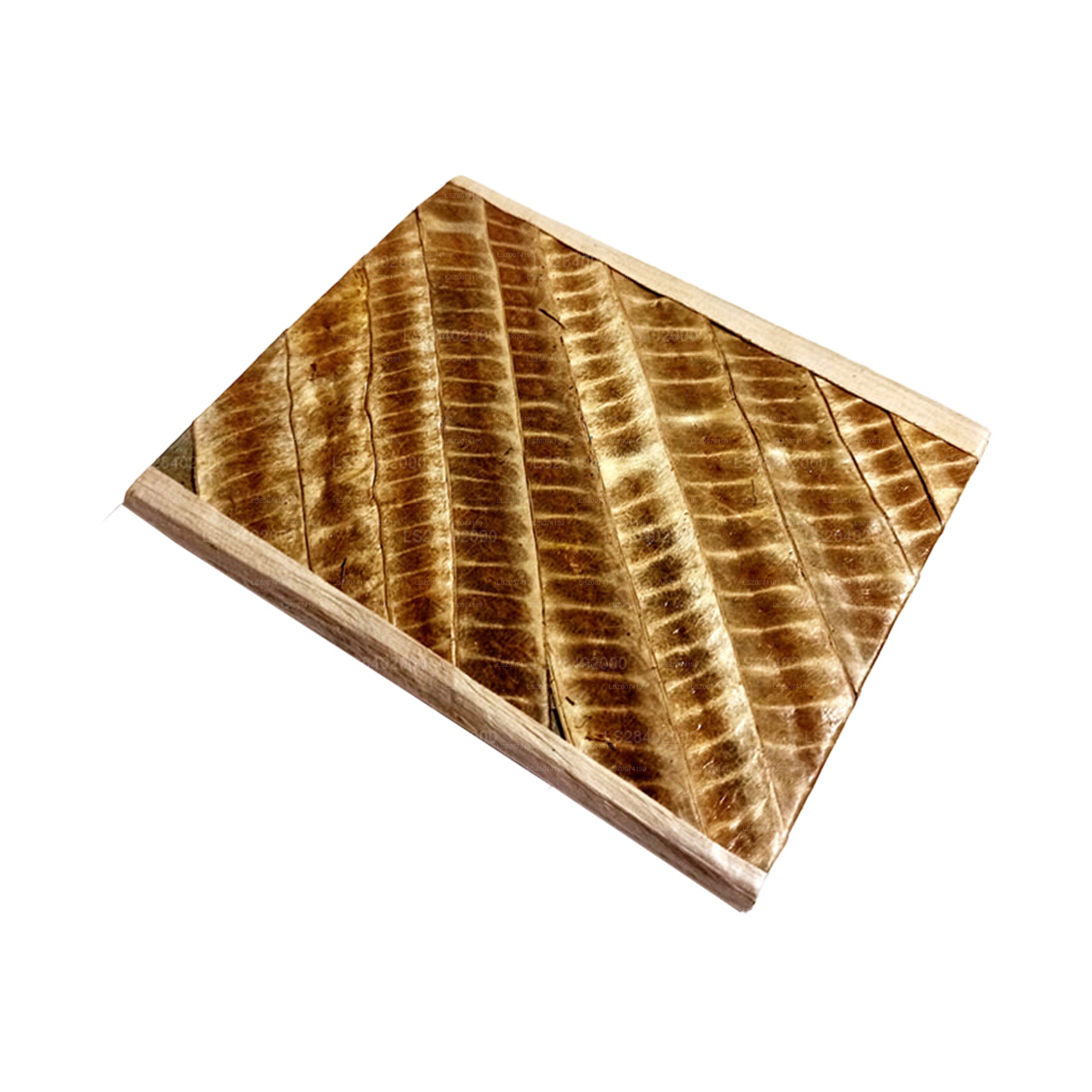
Elephant dung paper is one of Sri Lanka's more inventive contributions to sustainable craft. Made from the fibrous cellulose-rich material found in elephant waste, it converts what would otherwise be discarded into notebooks, greeting cards, and stationery that carry a genuine conservation story. The product sits at an unusual crossroads: ecologically sound, commercially viable, and culturally connected to an animal that has shaped Sri Lankan life for thousands of years.
What is elephant dung paper and how is it made?
Elephant dung paper exploits a simple biological fact: elephants are highly inefficient digesters. They process only around 40–45% of the plant matter they eat, meaning their dung is densely packed with undigested cellulose fibres — the same raw material used in conventional papermaking. This makes elephant dung an unusually rich agricultural by-product for the paper industry.
The production process follows several careful steps:
- Collection: Fresh dung is gathered from domestic elephants at sanctuaries and managed care centres, including sites near Pinnawala and Udawalawe National Park.
- Washing and sterilisation: The raw material is thoroughly rinsed multiple times and heat-treated to eliminate pathogens. The finished paper is hygienically safe to handle.
- Pulp preparation: The cleaned fibres are soaked and broken down with water to form a homogeneous pulp. Natural plant additives — grasses, leaves, flower petals — are sometimes blended in at this stage.
- Sheet forming: The pulp is poured onto fine mesh screens, spread evenly, and pressed to expel excess water.
- Drying and finishing: Sheets dry in open air or under gentle heat. Natural dyes derived from turmeric, indigo, or plant bark are applied to produce colour variations. The result is a slightly textured, off-white to warm-toned sheet with visible fibre patterns.
One adult elephant produces enough dung each day to yield roughly 25–30 sheets of paper, making the supply inherently renewable as long as the animals remain healthy and well cared for.
What products are made from elephant dung paper?
The most common finished goods are notebooks, journals, greeting cards, envelopes, and gift wrap. The texture of the paper — slightly rough, pleasantly weighty — suits hand-writing and sketching well. Artists and designers also use larger unlined sheets for printmaking and watercolour work, where the absorbent surface gives results that differ noticeably from smooth commercial stock.
Sri Lankan producers typically stamp or emboss covers with elephant motifs, reinforcing the provenance story and making the products appealing as souvenirs. Items range from slim pocket notebooks to thicker travel journals. The Elephant Transit Home near Udawalawe and similar wildlife centres sometimes sell locally produced dung-paper goods in their visitor shops, allowing tourists to support conservation directly through a purchase.
Why is elephant dung paper considered eco-friendly?
Conventional paper production requires felling trees, bleaching wood pulp with chlorine compounds, and managing significant volumes of chemical effluent. Elephant dung paper sidesteps all three concerns. The fibre source is a waste product; no trees are felled. Washing and sterilisation rely primarily on water and heat. Colourants, when used, are plant-based. The carbon footprint of small-batch artisanal production is a fraction of that from industrial paper mills.
There is also an indirect conservation benefit. When a wildlife centre or rural community earns stable income from processing elephant dung, it creates a financial incentive to keep elephants alive and healthy rather than viewing them as agricultural pests. This aligns with broader efforts to reduce human-elephant conflict — a genuine pressure point in Sri Lanka's Central, North Central, and Southern provinces, where farming land and elephant habitat increasingly overlap.
Where can you buy elephant dung paper products in Sri Lanka?
Elephant dung paper goods are sold at eco-tourism centres near major elephant habitats, craft markets in Colombo, Kandy, and Galle, and through online retailers including Lakpura's own shop. Prices are modest — individual notebooks typically start around USD 2–5 — making them an accessible souvenir that travels well and tells a clear story at home.
When buying, look for products that state the source of their fibre. Reputable producers name the sanctuary or care centre where dung was collected, which is a simple indicator of traceability. Avoid items that claim to be elephant dung paper but list no provenance — the market includes imitations made from conventional recycled paper dyed to mimic the characteristic texture.
How does elephant dung paper support rural communities?
Small-scale production units around elephant-dense areas employ local workers in dung collection, washing, pulp preparation, sheet forming, and packing. Because the process requires relatively low capital investment and no specialist chemicals, community groups and women's cooperatives have been able to establish viable micro-enterprises. The product's appeal to eco-conscious tourists and international buyers gives producers access to a market that values the story behind the object as much as the object itself.
Educational programmes in schools near wildlife corridors have adopted dung-paper making as a practical lesson in resource cycles and conservation. Students learn that a large mammal's daily waste can become a notebook, which tends to be a more memorable introduction to circular-economy thinking than a classroom diagram.
How does elephant dung paper connect to Sri Lanka's broader elephant culture?
Sri Lanka has one of the highest densities of Asian elephants relative to land area of any country in the world. The animals appear in temple processions, royal chronicles, and everyday iconography. The Esala Perahera Festival in Kandy is perhaps the most visible expression of that cultural bond, drawing elaborately adorned elephants through the city each year in a centuries-old tradition.
Elephant dung paper adds a contemporary, practical layer to this relationship. It does not romanticise or exploit the animals; it creates a small but tangible economic loop in which the elephant's biology is treated as a resource rather than a nuisance. For visitors, buying a sheet of dung paper or a notebook made from it is a minor act that connects daily life — writing a letter, sketching a landscape — to the conservation of a species that faces real pressure from habitat loss and conflict with farming communities.
Is elephant dung paper genuinely hygienic and safe to use?
Yes, when properly processed. The sterilisation step — typically boiling the washed fibres for an extended period — eliminates bacteria and parasites. Independent laboratory testing carried out by producers who export internationally has consistently shown that finished sheets meet food-contact-safe standards, though the paper is not intended for food contact use. The smell of the raw dung is entirely absent from the finished product. Sheets are odourless and clean to the touch, which surprises most first-time buyers who handle them without knowing the source material.
Related reading
1 pages on closely related subjects.