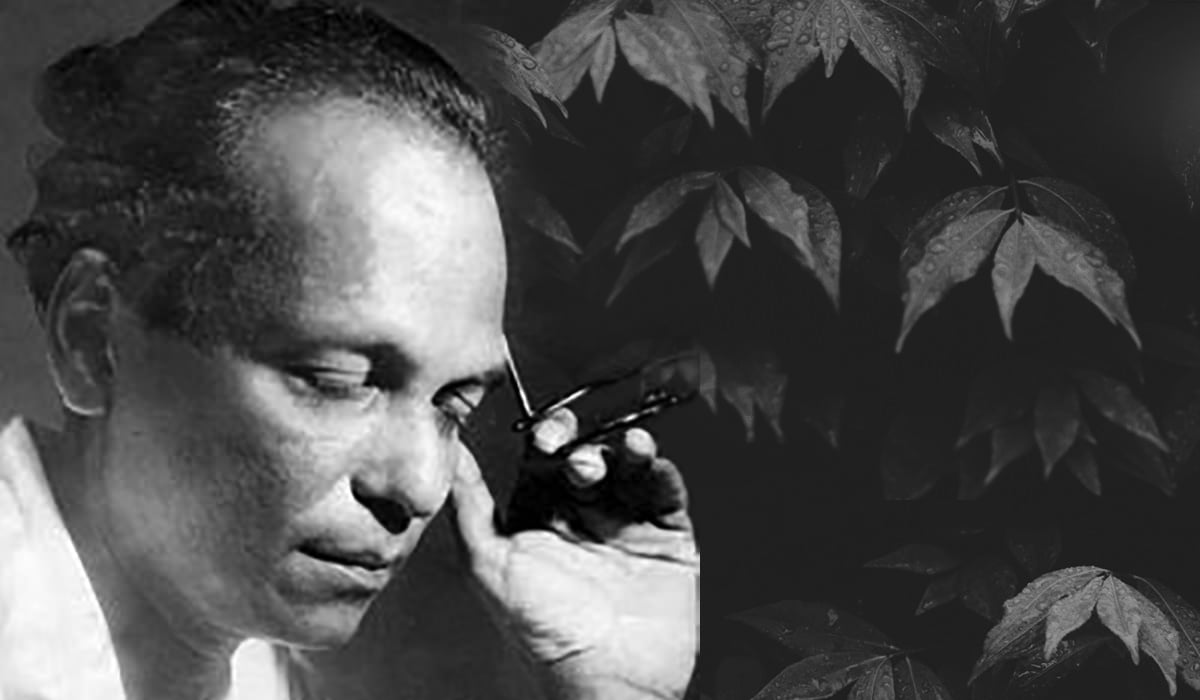
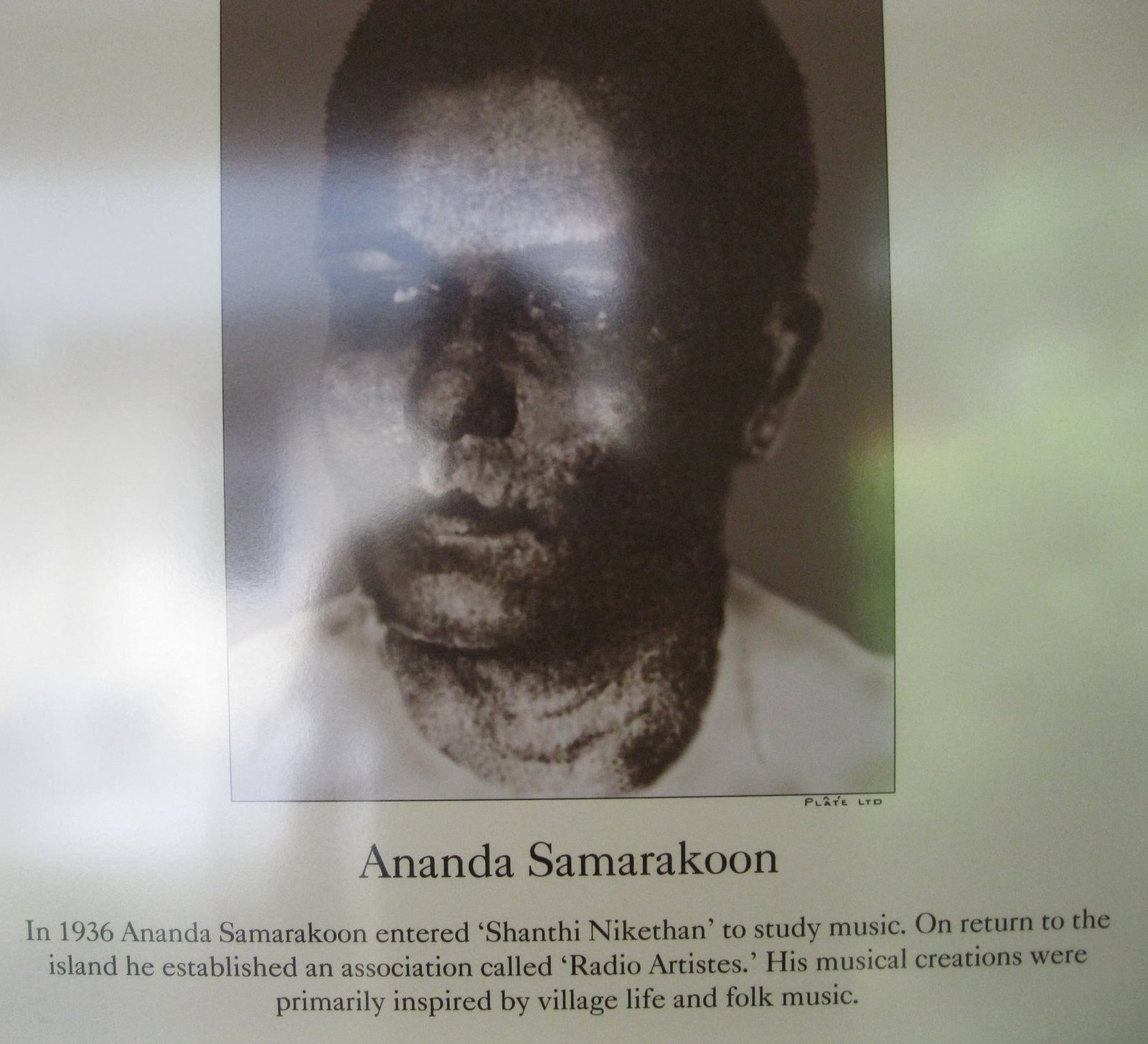

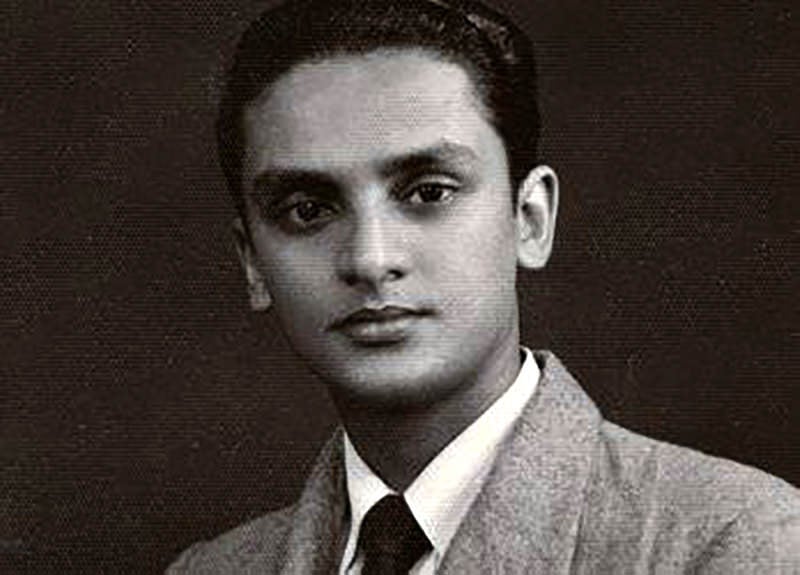
Ananda Samarakoon occupies a singular place in Sri Lankan cultural history. A schoolteacher by profession, a lyricist and composer by vocation, and a painter by circumstance, he is remembered above all as the man who composed the music and original lyrics of Sri Lanka's national anthem. His story is one of extraordinary creative achievement shadowed by personal loss and political disappointment.
Who was Ananda Samarakoon?
He was born on 13 January 1911 in Padukka, a small town in the Western Province, and his full name at birth — as recorded on his birth certificate — was Egodahage George Wilfred Alwis Amarakoon. He grew up in a Christian family and received his early schooling at what is now Kotte Sri Jayawardenepura Maha Vidyalaya, then known as the Christian School, Kotte. It was there that he came under the influence of D.C.P. Gamlath, a scholar widely regarded as one of the foremost teachers of Sinhala language of his era, an encounter that shaped his literary sensibility for life.
How did George Wilfred become Ananda Samarakoon?
The transformation from George Wilfred Alwis Amarakoon to Ananda Samarakoon happened during a formative journey to India, where he enrolled at Santiniketan — the celebrated cultural and educational institution founded by Rabindranath Tagore. At Santiniketan he studied Eastern traditional music and Indian classical music, immersing himself in the aesthetic philosophy that Tagore had built around the idea of art as spiritual practice. When he returned to Sri Lanka after roughly six months, he embraced Buddhism and adopted the name Ananda Samarakoon, signalling a complete reinvention of his identity. His time at Santiniketan left a lasting mark on his compositional style: the songs he went on to write are characterised by a lyrical restraint and melodic refinement that set them apart from the popular music of his time.
What songs did Ananda Samarakoon compose?
Samarakoon's catalogue spans devotional pieces, nature poetry set to music, and songs rooted in everyday Sri Lankan life. Among the works that remain in the national repertoire are Podi Mal Ethano, Wile Malak Pipila, Poson Pohoda, Ase Madura Jeewanaye Geetha, Punchi Suda, Nilwala Gange, Sumano, Pudamu Me Kusume, and Siri Saru Saara Kethe. Endada Manike was composed as a deliberate attempt to forge a distinctly Sri Lankan musical identity — blending Sinhala poetic conventions with the musical ideas he absorbed at Santiniketan. This body of work established him as one of the most important Sinhala lyricists of the twentieth century.
How did Ananda Samarakoon come to write the national anthem?
Following his return from India, Samarakoon composed Namo Namo Matha, the song that would become the basis for Sri Lanka's national anthem. The anthem was recorded in 1946, the year before Ceylon gained independence from Britain. The government accepted it as the official anthem, but the adoption process was not without controversy. The original opening line, Namo Namo Matha, was subsequently changed to Sri Lanka Matha — an alteration Samarakoon opposed strongly. He believed the revision undermined the integrity of the composition as he had conceived it, and the dispute caused him lasting anguish.
What role did he play as an educator?
Between 1938 and 1942, Samarakoon taught at Mahinda Vidyalaya in Galle, one of Sri Lanka's most respected schools, where he contributed both to the formal curriculum and to the cultural life of the institution. His career as a Galle-based educator coincided with one of his most productive periods as a composer, and the southern landscape — the river systems, paddy fields and coastal light — permeates much of the lyrical imagery from those years.
How did personal tragedy shape his later life?
In 1945, Samarakoon suffered what he described as the most devastating experience of his life: the death of his only son at the age of five. Grief drove him back to India, where he turned to painting as a way of processing loss. The decision proved to be artistically transformative. He developed a serious practice in visual art and eventually held eleven solo exhibitions, producing a body of paintings that demonstrated the same attention to beauty and form that characterised his musical work. He returned to Sri Lanka in 1951, but the years that followed were unsettled, marked by the ongoing dispute over the national anthem lyrics and a growing sense of alienation.
What is Ananda Samarakoon's legacy?
Ananda Samarakoon died on 5 April 1962. It is widely believed that he took his own life, with many commentators linking his death to the frustration he felt over the changes imposed on the national anthem he had created. He was 51 years old. In Sri Lanka, his name is synonymous with the intersection of music, literature and national identity. The Buddhist educational tradition he embraced in his adult life shaped his creative philosophy as much as his formal training at Santiniketan did. His songs continue to be taught in schools across the island, and Sri Lanka Matha is heard at every state occasion, carrying within it the spirit — if not the exact words — of the man who composed it.
| Year | Event |
|---|---|
| 1911 | Born on 13 January in Padukka, Western Province |
| Early 1930s | Studies music and arts at Santiniketan, India; embraces Buddhism |
| 1938–1942 | Teaches at Mahinda Vidyalaya, Galle |
| 1945 | Death of his only son; travels to India; takes up painting |
| 1946 | National anthem Namo Namo Matha recorded |
| 1951 | Returns to Sri Lanka |
| 1962 | Dies on 5 April; anthem opening line had been altered to Sri Lanka Matha |