

Embekke Temple in Sri Lanka: A Place with Some of the Best Woodcraft in the World
In the Udu Nuwara area of the Kandy district lies a temple with a history of over six centuries. Built during the reign of King Wickremabahu III (1371-1394 AD), who ruled in the Kingdom of Gampola, the temple is practically covered in wood carvings. The woodwork is confirmed by UNESCO as some of the best and most detailed in the world. The temple is dedicated to the god known as ‘Murugan’ by the Hindus and ‘Katharagama deity’ by the Buddhists.
The Story
Legend states that King Vickramabahu III’s consort, Henakanda Biso Bandara, woke from a strange dream in which the god appeared and asked to build a temple for him. On finding that a drummer, Rangama, had the same dream, they considered it a portent and built a temple together. The original temple was supposed to have been a three-story building that unfortunately did not survive the ravages of time.
The Structure
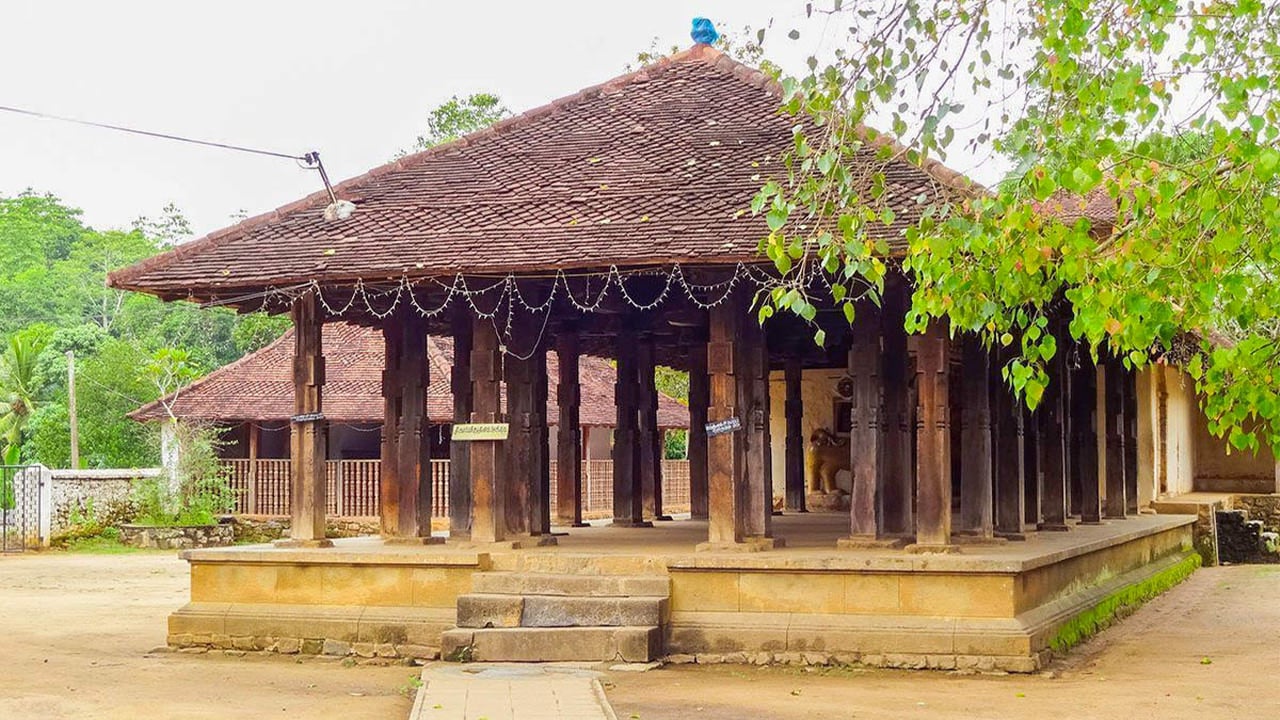
The temple consists of three main areas. The first is the Sanctum of Garagha, which is the inner sanctum where the statues of the god are located. Next is the Dance Hall or Digge, which is representative of the king’s consort Henakanda Bandara, and where dancing events were held in the times of the kings. The final section is the Drummers’ Hall, representing the drummer Rangama and where musical events were once held.
The Woodcraft
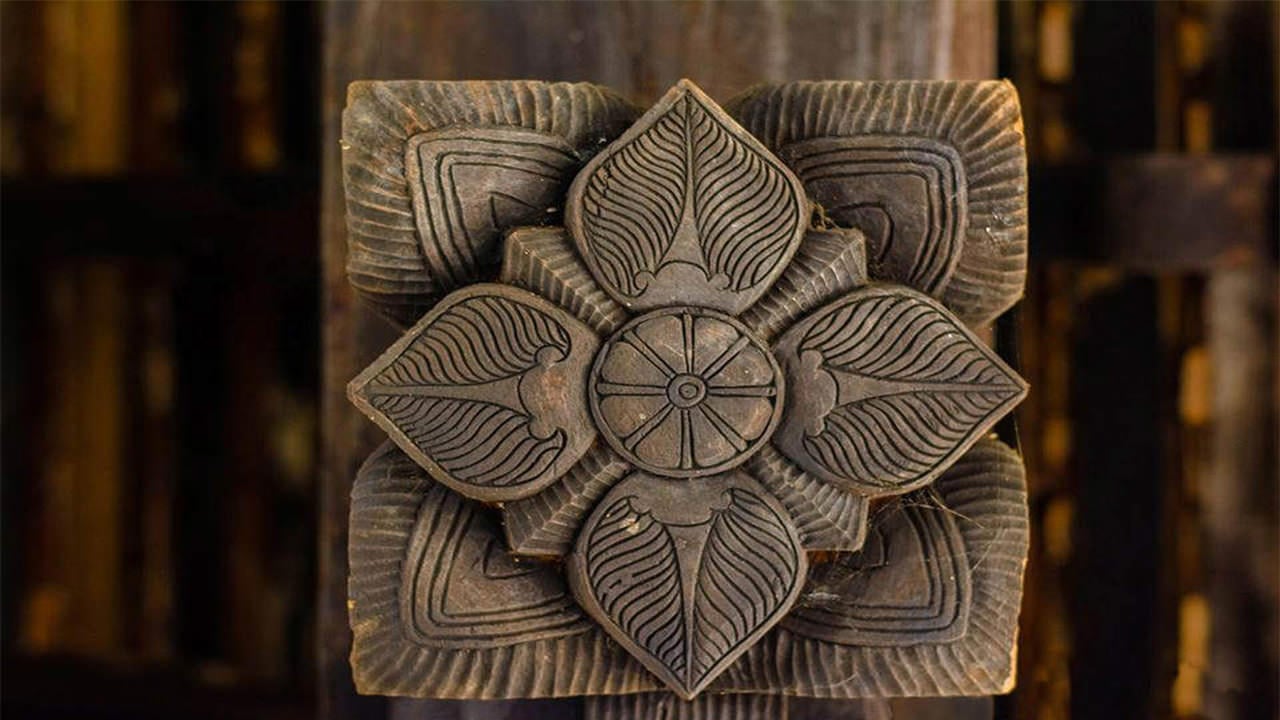
Except for the Sanctum, the rest of the temple is made almost entirely of wood. From carved wooden pillars in the Halls with open sides to the beautifully crafted roof, the entire area is covered in carvings. The bases of the pillars are octagonal in shape, while their tops end in the shapes of four leaves stacked in a square. The pillars have various images carved into the sides of the bases. In addition, carvings adorn the beams, rafters, and doorframes.
Notable carvings among these masterpieces include those of entwined swans, double-headed eagles, entwined rope designs, a breast-feeding image, a soldier fighting on horseback, female dancers, wrestlers, women emanating from a vein, bird-human hybrids, elephant-bull hybrids, elephant-lion hybrids, and more. The carvings of the entire temple include 125 series of decorations, 256 liyawela type designs, 64 lotus designs, 30 decorative patterns, and roof designs, resulting in 514 unique designs.
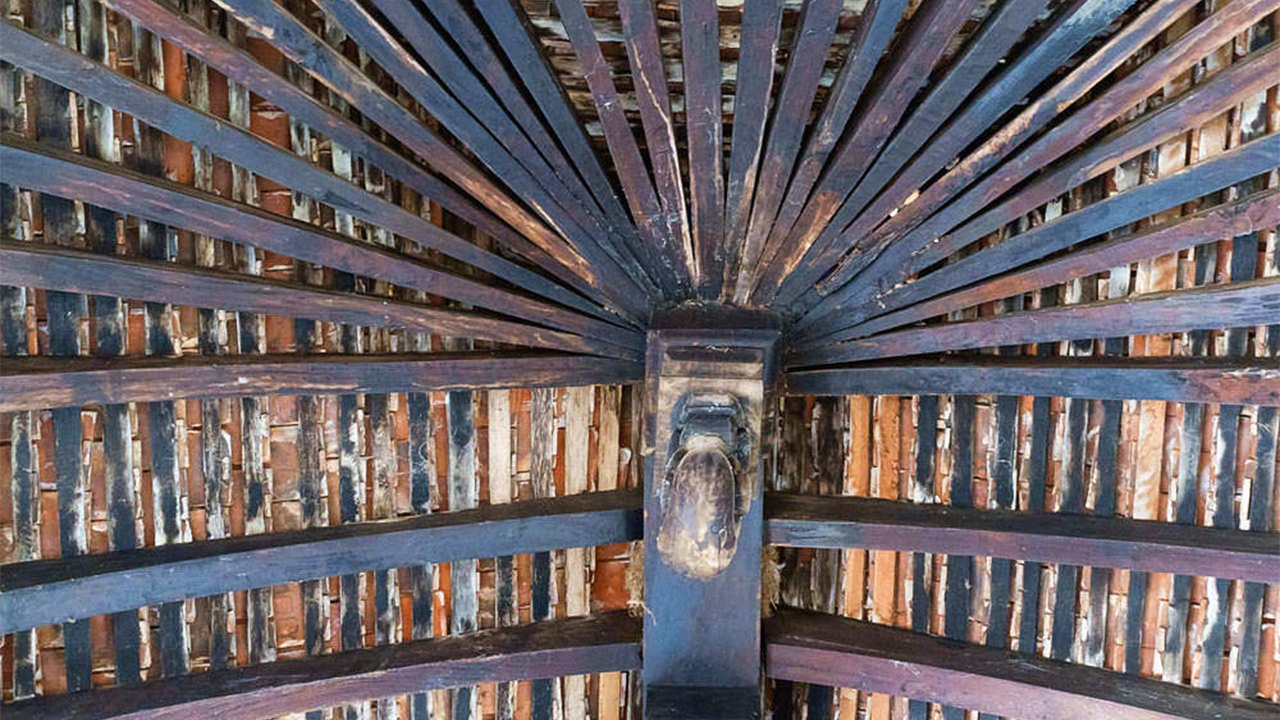
The roof of the temple is an excellent example of ancient wooden architecture, where the 26 rafters are supported by a single wooden pin.
Related Ruins
About an eighth of a mile away from the temple, there lie some ruins with a group of stone pillars. The carvings on the pillars are identical to those of the Embekke temple. It is said that once a wooden roof rested on these pillars, but now they have fallen into ruin.
Both the Embekke Temple and the nearby ruins are worth visiting for lovers of both history and art.
Nearby places
12 places within about 25 km, nearest first.
- Three Temples Loopunder 1 km
- Kiribathkumura City1 km
- Gadaladeniya Viharaya1 km
- Lankathilaka Viharaya1 km
- Hantana City2 km
- Pilimatalawa2 km
- Stazione ferroviaria di Balana2 km
- Geragama Tea Factory2 km
- Pilimathalawa Tea Factory2 km
- Kadugannawa Rock Tunnel2 km
- Stazione ferroviaria di Kadugannawa3 km
- Gadaladeniya City3 km


