Lakpura
Lakpura®

Sri Lanka Tented Safari Camping, Yala

Yala National Park sits at the southern tip of Sri Lanka, roughly 300 kilometres from Colombo, where the dry-zone scrub meets a jagged coastline and ancient rock outcrops rise above open savannah. It is the island's most visited wildlife reserve — not simply because of its size, but because few places on earth offer a comparable chance of encountering a wild leopard in broad daylight. Staying in a tented safari camp here places you inside that landscape from first light to last, with canvas walls thin enough to hear the park breathe at night.

What makes Yala National Park worth visiting?

Formally known as Ruhuna National Park, Yala is Sri Lanka's second-largest protected area and its most biodiverse. More than 30 species of mammals have been recorded within the park boundaries, including the Sri Lankan leopard (Panthera pardus kotiya), Sri Lankan elephant, sloth bear, spotted deer, and sambar. The leopard density in Block I — the section open to day visitors — is among the highest recorded anywhere in the leopard's global range, which is why wildlife photographers travel from across the world specifically for this park.

Birdlife is equally compelling: over 200 species have been logged here, among them painted storks, black-necked storks, endemic Sri Lanka junglefowl, and several migratory waders that use the park's lagoons and coastal wetlands during the northern winter.

The terrain itself shifts across a surprisingly short distance. Dense thorn scrub gives way to open grassland, which drops into brackish lagoons, freshwater tanks, rocky outcrops, and a shoreline where elephants sometimes walk along the beach at dusk. That variety is what keeps a safari inside Yala visually interesting from start to finish.

What is tented safari camping like at Yala?

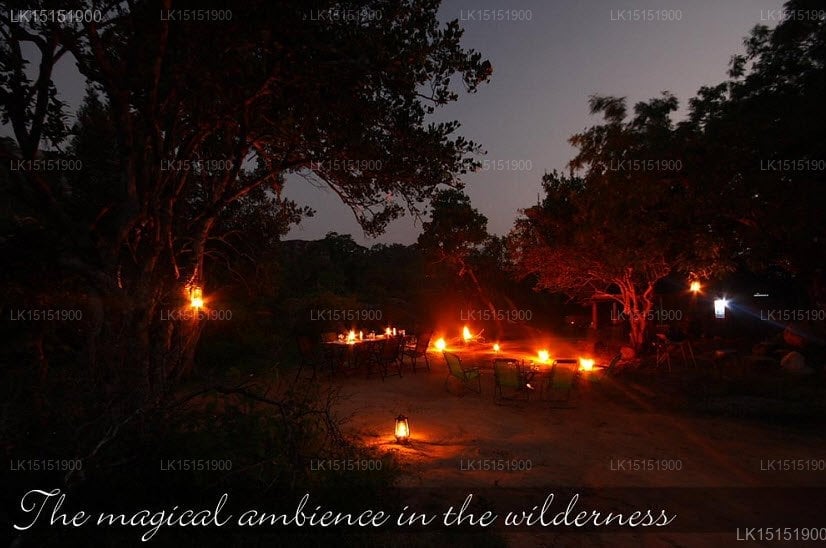
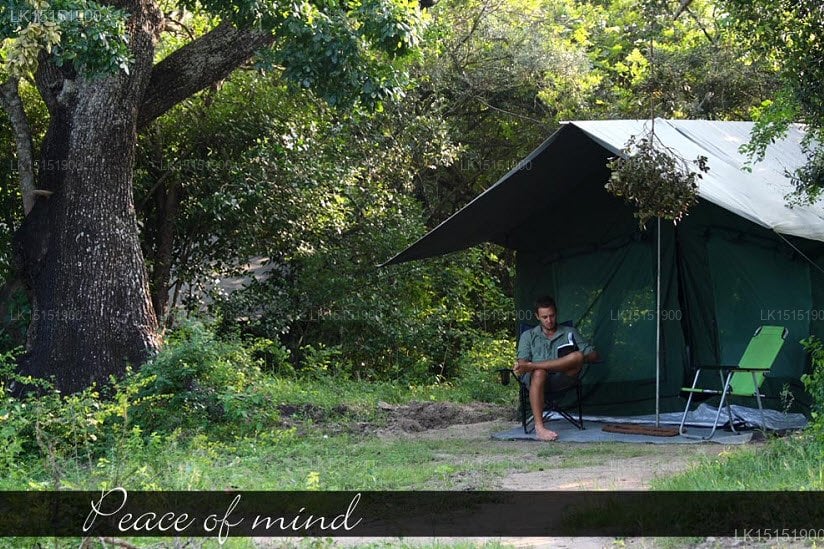
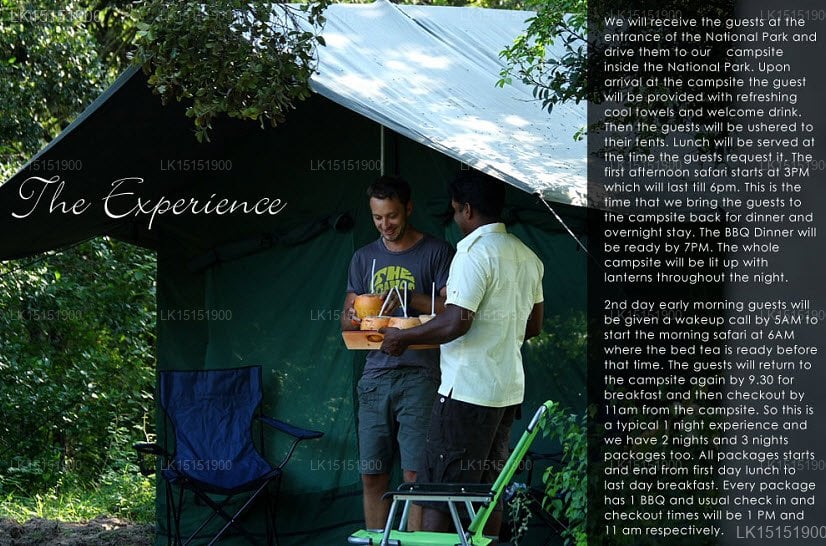
Tented safari camps at Yala occupy private land on the park buffer zone or, in some cases, within permitted concession areas. The setup is deliberately simple: a structured canvas tent on a raised platform, with a private en-suite bathroom, a camp bed with proper linen, and communal areas for meals and evening conversation around a fire. The emphasis is on proximity to the natural environment rather than hotel-style insulation from it.

Mornings at a tented camp follow a rhythm shaped by the park. Safaris depart before the gates open to catch the cool hours when leopards are most active and the light is at its most even. Breakfast is served on return, and the middle of the day — the hottest period — is typically spent resting at camp. An afternoon drive goes out again as temperatures drop and animals return to open ground near water sources.

Because camps are small — usually no more than a handful of tents — the atmosphere is unhurried and genuinely personal. Guides who work the same blocks over many seasons develop detailed knowledge of individual animal territories and behaviour, which translates into more productive and more interesting game drives.

When is the best time to visit Yala for a safari?

Yala operates on a dry-season rhythm. The park is typically at its best between February and July, when vegetation thins out after the northeast monsoon and water concentrates in predictable spots. Animals gather around lagoons and waterholes, making sightings more reliable and more frequent.

The park closes for an annual rest period, usually for around six weeks between late August and mid-October, though the exact dates vary by year and are set by the Department of Wildlife Conservation. Visiting outside this closure but during the shoulder months — particularly November through January — is still productive, and the lush post-monsoon landscape has its own appeal, especially for birding.

  • February – July: prime leopard and elephant sightings; dry and sunny
  • August – mid-October: park typically closed for annual rest
  • November – January: greener, wetter; excellent for migratory birds and fewer crowds

How do I get to Yala from Colombo?

The most practical route from Colombo is by private vehicle via the Southern Expressway (E01) to Matara, then continuing east along the coastal road through Tangalle and Tissamaharama, which serves as the main gateway town for the park. The journey typically takes around four to five hours depending on traffic and the specific section of the park you are heading to.

Tissamaharama — locally known as Tissa — has a small town centre with ATMs, a fuel station, and basic provisions. Most tented camps arrange pickup from Tissa or from the park's main entrance gate, so co-ordinating arrival logistics with the camp directly before travel is straightforward.

Alternatively, a domestic flight to Mattala Rajapaksa International Airport (HRI), located around 45 kilometres from the Yala entrance, cuts the overland journey significantly. Charter and scheduled flights operate this route, and transfers can be pre-arranged through your accommodation or DMC.

What wildlife can I realistically expect to see at Yala?

Leopard sightings at Yala are more consistent than at almost any other site in South Asia, but no wildlife encounter can be guaranteed. Experienced guides with detailed knowledge of recent sightings and animal territories substantially increase the probability of a good encounter. Elephants are seen on the majority of drives, as are spotted deer, peacocks, and water monitor lizards. Sloth bear sightings are less predictable but occur regularly, particularly near fruiting trees and termite mounds.

Marine turtles occasionally nest on the park's coastal beaches, and the lagoons hold crocodiles throughout the year. If birdwatching is a priority, arriving during the northern winter months brings additional migratory species to the wetland areas.

What should I pack for a tented safari camp stay?

Yala's climate is warm and dry for most of the peak season. Light, neutral-coloured clothing in beige, khaki, or olive works well on safari without creating unnecessary visual disturbance. A light fleece or layer is useful for early-morning drives, when temperatures before dawn can feel noticeably cool despite the surrounding warmth.

  • Lightweight long-sleeved shirts and trousers for morning drives (sun and insect protection)
  • Good sunscreen, sunglasses, and a wide-brimmed hat
  • Insect repellent — apply before evening drives
  • Binoculars — even a compact pair transforms birdwatching and distant mammal observation
  • A camera with a telephoto lens if photography is a priority; telephoto lenses of 200mm or above are recommended
  • Dust bag or protective cover for camera gear on open jeep rides
  • Any personal medication, as pharmacies in Tissa are limited

Are there responsible tourism considerations at Yala?

Yala receives very high visitor numbers during the peak season, and responsible behaviour inside the park is important both for animal welfare and the quality of the safari experience. Reputable tented camps work with guides and jeep operators who adhere to Department of Wildlife Conservation guidelines: maintaining safe distances from animals, not using calls or sounds to attract wildlife, and not blocking an animal's movement path.

When selecting a tented camp or safari operator, it is worth asking whether they operate under a concession agreement with the Wildlife Conservation Department, what their off-road driving policy is, and whether guides hold formal certification. Camps that invest in trained naturalist guides consistently produce better wildlife encounters and cause less disruption to the animals themselves.

Book this experience with Lakpura

Curated by our local team. Direct booking, instant confirmation.

Ask Lakpura® Agent