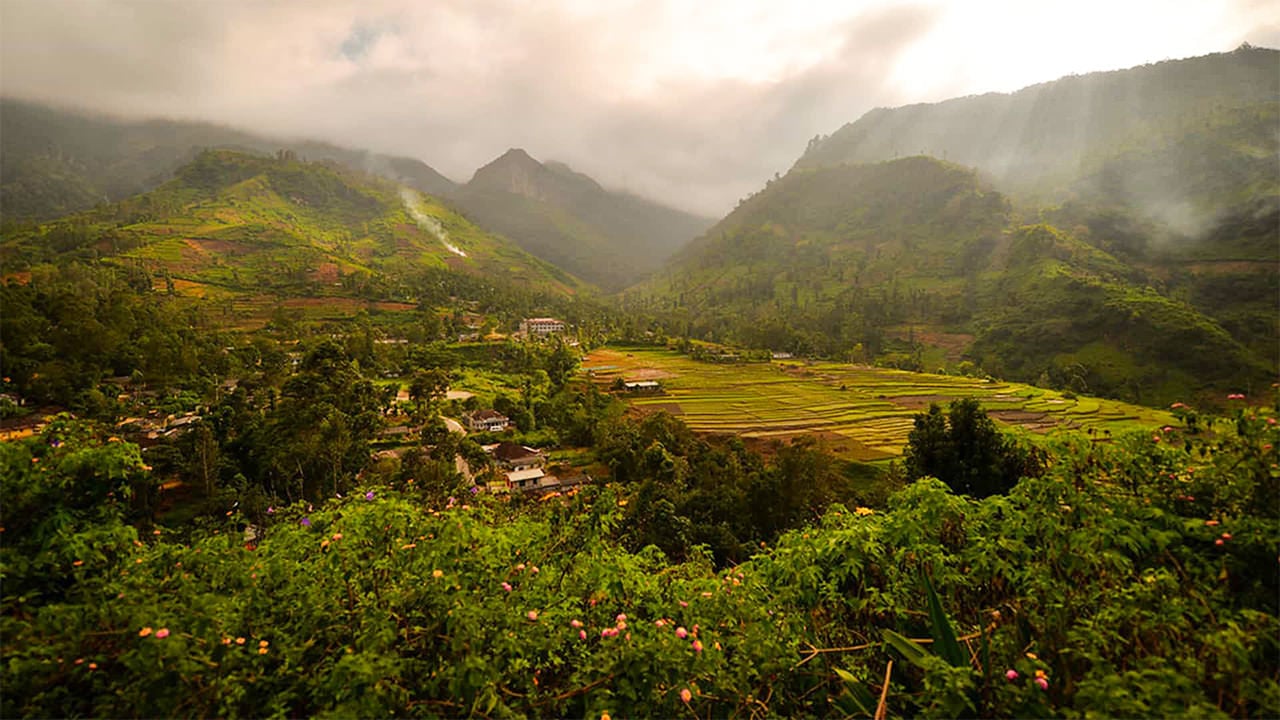


Tucked beneath the slopes of Pidurutalagala — Sri Lanka's highest mountain — Mandaramnuwara is one of the central highlands' least-visited corners. The village sits roughly 54 km off the Walapane road and about 13 km from Padiyapelella, hemmed in by the Pidurutalagala Forest Reserve to the west and the Balagolla mountain ranges to the east. Its elevation means cloud cover is almost permanent, and the air carries a cool dampness that feels worlds apart from the lowland heat of Colombo or Kandy.
What makes Mandaramnuwara different from other hill-country villages?
Most visitors to the central highlands head straight for Nuwara Eliya or Ella, leaving Mandaramnuwara largely to its own quiet rhythms. The village is not a resort town. There are no manicured gardens or horse-racing tracks — just terraced smallholdings, dense montane forest, and a near-constant drift of mist that can reduce visibility to a few dozen metres by mid-morning. That remoteness is precisely the draw for travellers who want to step off the well-worn trail.
The surrounding landscape is shaped by exceptionally high rainfall. Because the village is sheltered on two sides by mountain ranges that intercept moisture-laden winds, rain falls reliably throughout the year, sustaining a lush ecosystem that includes cloud-forest patches, fern-carpeted stream banks, and an impressive concentration of waterfalls.
How many waterfalls are there, and which ones are worth visiting?
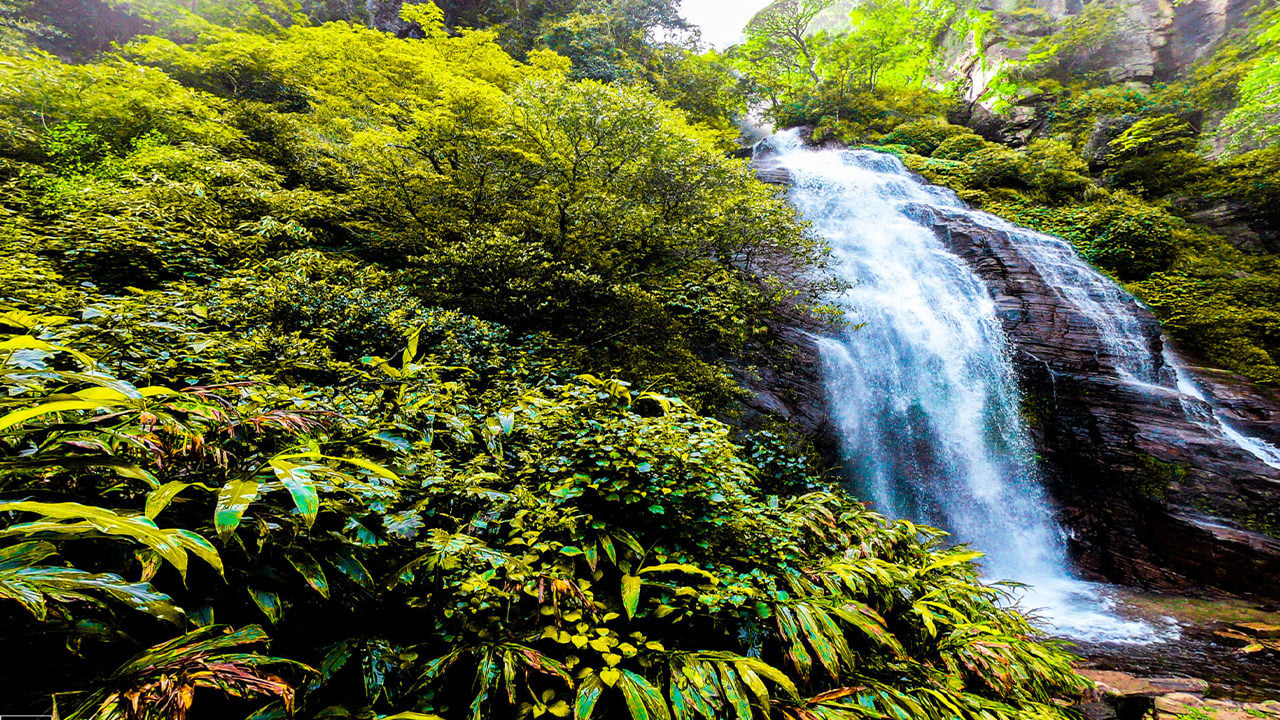
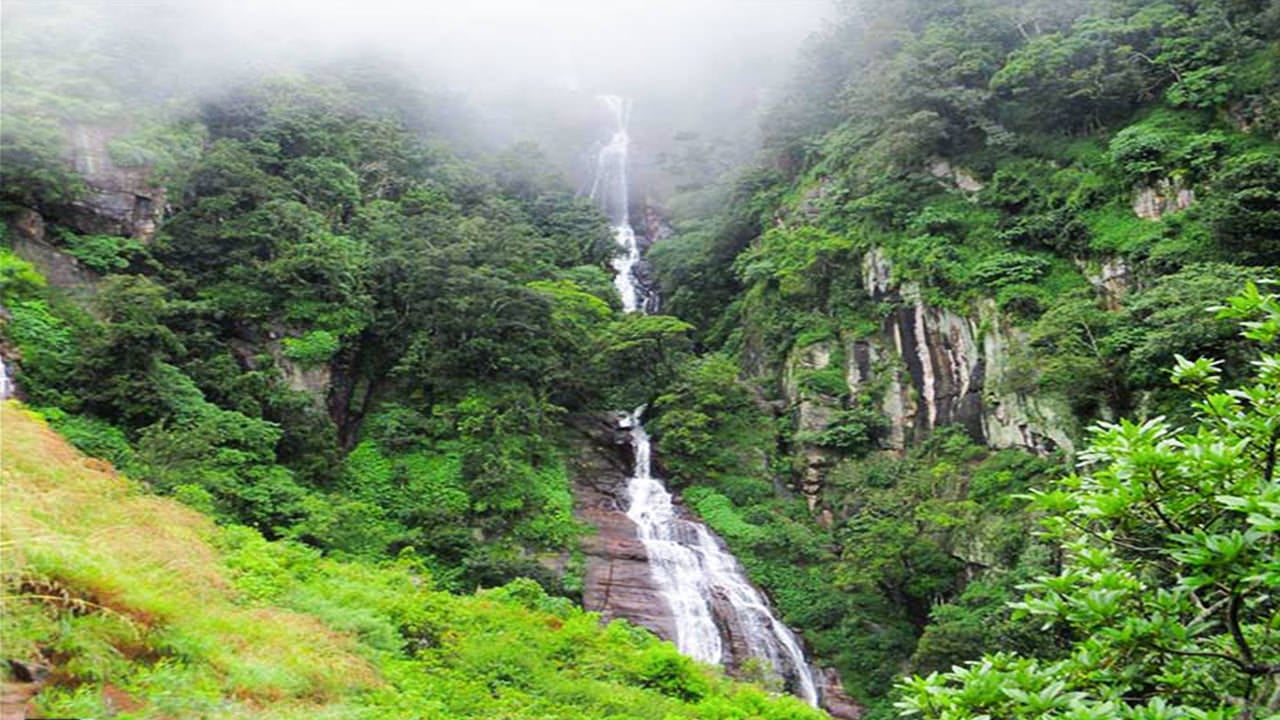
The Mandaramnuwara area is home to around 14 known waterfalls, making it one of the densest waterfall clusters in the island's hill country. Of these, six main falls can be visited in a two-day circuit. Two stand out above the rest:
- Kolapathana Falls — one of the more dramatic cascades in the area, set within thick forest that keeps the surroundings cool even on drier days.
- Kabaragala Falls — equally scenic and relatively accessible once you have a vehicle to navigate the winding approach roads.
A private vehicle is essential for reaching most of the falls; public transport options are limited on these mountain roads. The rough terrain also means that some short walks on foot are unavoidable once you leave the road, so bring waterproof footwear. The paths can be muddy after rain — which, given the climate, is most of the time.
What are the best viewpoints in Mandaramnuwara?
Two viewpoints are considered the highlights of any visit. The Temple Viewpoint offers a perspective across the valley that is particularly atmospheric in the early morning, when mist fills the lower ground and only the ridgelines are visible. The No. 10 Viewpoint provides a broader panorama and is a good spot to observe the shifting cloud patterns that define daily life in the village. Neither viewpoint requires a steep climb, though the road to reach them demands care after heavy rain.
Because of the altitude and persistent cloud cover, clear views are a matter of timing and luck. Early mornings — before cloud builds again after a brief nightly clearance — give the best chance of an unobstructed panorama toward Pidurutalagala's ridgeline.
When is the best time to visit Mandaramnuwara?
There is no truly dry season in Mandaramnuwara, which is part of its character. The village receives rainfall from both the southwest and northeast monsoons, so some level of mist or drizzle should be expected year-round. That said, the inter-monsoon periods — roughly February to March and again in September — tend to bring slightly more settled conditions. Visiting during these windows improves the odds of clearer views and drier waterfall paths, though even then the landscape remains green and cloud-prone.
If you are combining Mandaramnuwara with a broader hill-country itinerary, note that Horton Plains National Park lies within a few hours' drive and is best visited in the morning before cloud rolls in — a schedule that pairs naturally with an afternoon arrival in Mandaramnuwara.
How do I get to Mandaramnuwara from Colombo or Kandy?
From Colombo, the most practical approach is to drive via Kandy and then continue through Walapane toward Padiyapelella. The total journey from Colombo typically takes around four to five hours depending on road conditions and the route chosen. From Kandy, the drive is shorter — roughly two to three hours — but the final stretch on mountain roads is slow and winding.
There is no direct bus service that terminates at the village itself. Travellers relying on public transport can reach Walapane or Padiyapelella by bus and arrange a tuk-tuk or hired vehicle from there, though road conditions and availability can make this unpredictable. A private driver is the most reliable option for this destination.
What is the landscape and ecology like around the village?
Mandaramnuwara borders the Pidurutalagala Forest Reserve, a protected area that rises to the island's highest point at around 2,524 metres above sea level. The reserve is one of Sri Lanka's most sensitive ecological zones and access beyond designated areas is restricted. The montane forest at this altitude supports a range of endemic bird species, rare orchids, and mossy undergrowth characteristic of cloud forest ecosystems.
The village itself sits within agricultural land where smallholder families cultivate vegetables, tea, and other hill-country crops. The contrast between the cultivated terraces and the dark forest edge just beyond them gives the settlement a distinctive, almost otherworldly atmosphere — particularly on days when low cloud fills the valley and the upper forest disappears entirely from view.
Is Mandaramnuwara suitable for families and casual travellers?
The village suits travellers who are comfortable with unpaved roads, variable weather, and a destination where the appeal is atmosphere rather than organised attractions. There are no entry-fee sites, ticketed experiences, or curated visitor facilities in the conventional sense. What the village offers is a rare chance to experience Sri Lanka's central highlands in something close to their natural state — quiet, damp, and genuinely remote.
Families with young children can enjoy the scenery and shorter waterfall walks, but should be prepared for muddy trails and limited facilities. Anyone with mobility considerations should note that the terrain is uneven and some paths become slippery after rain. For travellers keen on tea, the area also has a working tea factory that provides an insight into highland tea production — a natural complement to any visit to Sri Lanka's hill country, where Ceylon Tea has shaped the landscape for more than a century.
Where should I stay near Mandaramnuwara?
Accommodation options within the village itself are limited to small guesthouses and homestays. Travellers preferring more established facilities typically base themselves in Kandy or Nuwara Eliya and make a day trip into the valley, though this means an early start to make the most of the clearer morning conditions. Staying locally, if you can arrange it, gives a truer sense of the village's pace — evenings here are quiet, cold by Sri Lankan standards, and often wrapped in a silence broken only by the sound of water running off the hillsides.
Nearby places
8 places within about 25 km, nearest first.
- Padiyapellela City2 km
- Walapane Town5 km
- Rikilla Ella6 km
- Ragala City9 km
- Mountains to Climb9 km
- Kadapola City10 km
- Kandapola City10 km
- Pidurutalagala10 km