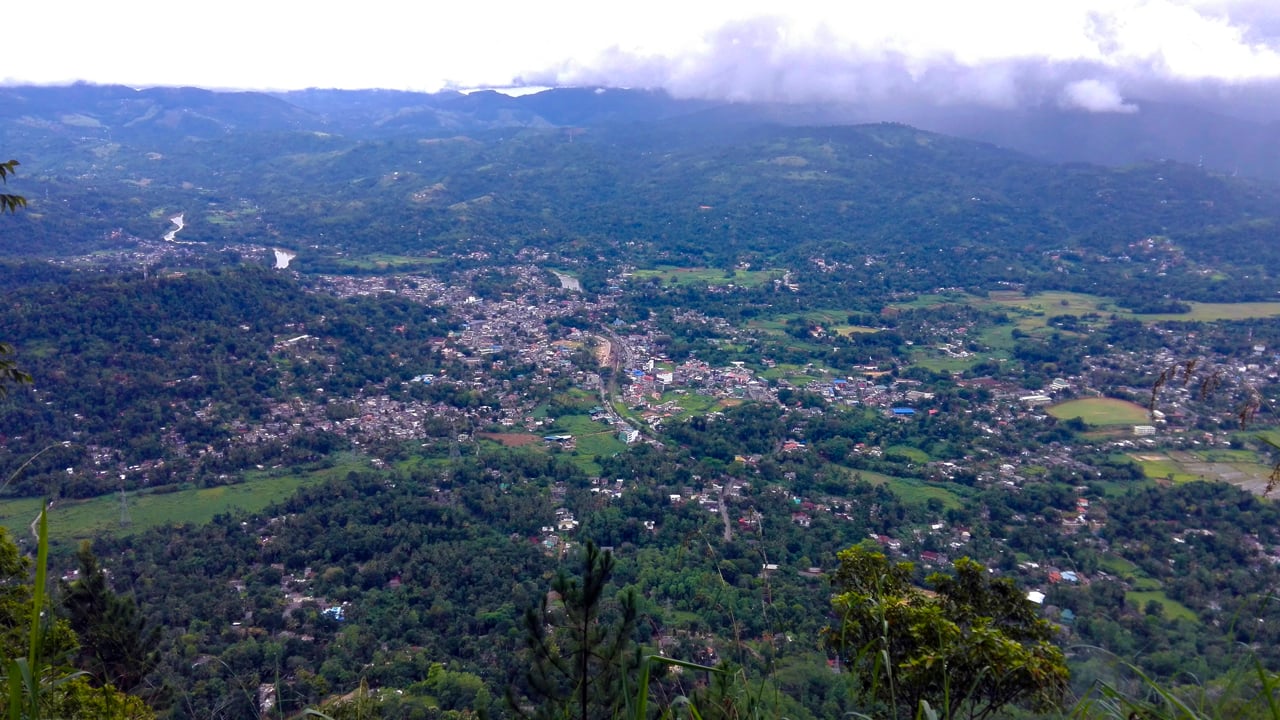

Gampola sits quietly in the hills of Kandy District, Central Province, roughly 20 km south of Kandy city, at an elevation that keeps the air cool even in the height of summer. Most travellers pass through en route to the tea country, yet few realise they are crossing what was once the seat of a medieval Sinhalese kingdom. For a brief but architecturally fertile period in the mid-fourteenth century, Gampola served as the capital of Sri Lanka — a legacy written in stone, timber, and carved wood across the surrounding landscape.
What is the history of Gampola as a royal capital?
King Buwanekabahu IV established Gampola as the island's capital and ruled from here for approximately four years during the mid-1300s. The kingdom's final ruler, King Buwanekabahu V, extended that royal chapter by 29 years. During this same era, a powerful noble named Alagakkonara founded a parallel seat of power at Kotte, near present-day Colombo — a move that foreshadowed Gampola's eventual decline as the political centre of the island.
The Gampola period (roughly 1341–1415 AD) is notable not only for political intrigue but for a burst of religious architecture that drew heavily on South Indian artistic traditions. The temples commissioned during this era remain some of the finest examples of medieval Sinhalese craftsmanship anywhere in the country.
What are the most important temples near Gampola?
Three temples stand above the rest as monuments to the Gampola kingdom's artistic ambitions.
- Lankathilaka Temple — A towering image house whose ancient stone inscriptions (shila lekhana) provide historians with some of the most detailed records of Gampola-era court life and patronage. The Buddha image inside reflects a clear South Indian stylistic influence, distinguishing it from earlier Sinhalese sculpture.
- Gadaladeniya Temple — A rock-cut shrine built largely in the South Indian Dravidian style, unusual for the central highlands. Its setting on a granite outcrop surrounded by old growth trees makes it as atmospheric as it is historically significant.
- Embekka Devalaya — Dedicated to the god Kataragama, Embekka is famous throughout Sri Lanka for its wooden pillared hall, which contains an extraordinary collection of carved panels. Swans, wrestlers, double-headed eagles, and dancers cover almost every surface — a level of decorative complexity unmatched by any other timber structure on the island.
All three sites are within easy reach of one another and are typically visited together on a half-day loop from either Gampola town or Kandy. The Kandy city tour can be extended to include these temples with prior arrangement.
Where is the longest sleeping Buddha statue in South Asia?
The Saliyalapura Temple in Gampola houses a reclining Buddha statue reputed to be the longest of its kind in South Asia. The statue is a place of active worship rather than a museum piece — visitors are welcome but are expected to dress modestly and remove footwear before entering the shrine room.
What is Ambuluwawa mountain and why do visitors go there?
Rising to around 1,087 metres above sea level on the edge of Gampola, Ambuluwawa is a conical peak that hosts one of Sri Lanka's more unusual hilltop attractions. The Ambuluwawa Biodiversity Complex was conceived as a celebration of environmental conservation and Sri Lanka's multi-religious heritage — a rare site where a Buddhist stupa, a Hindu kovil, a mosque, and a church stand in close proximity on the same hilltop.
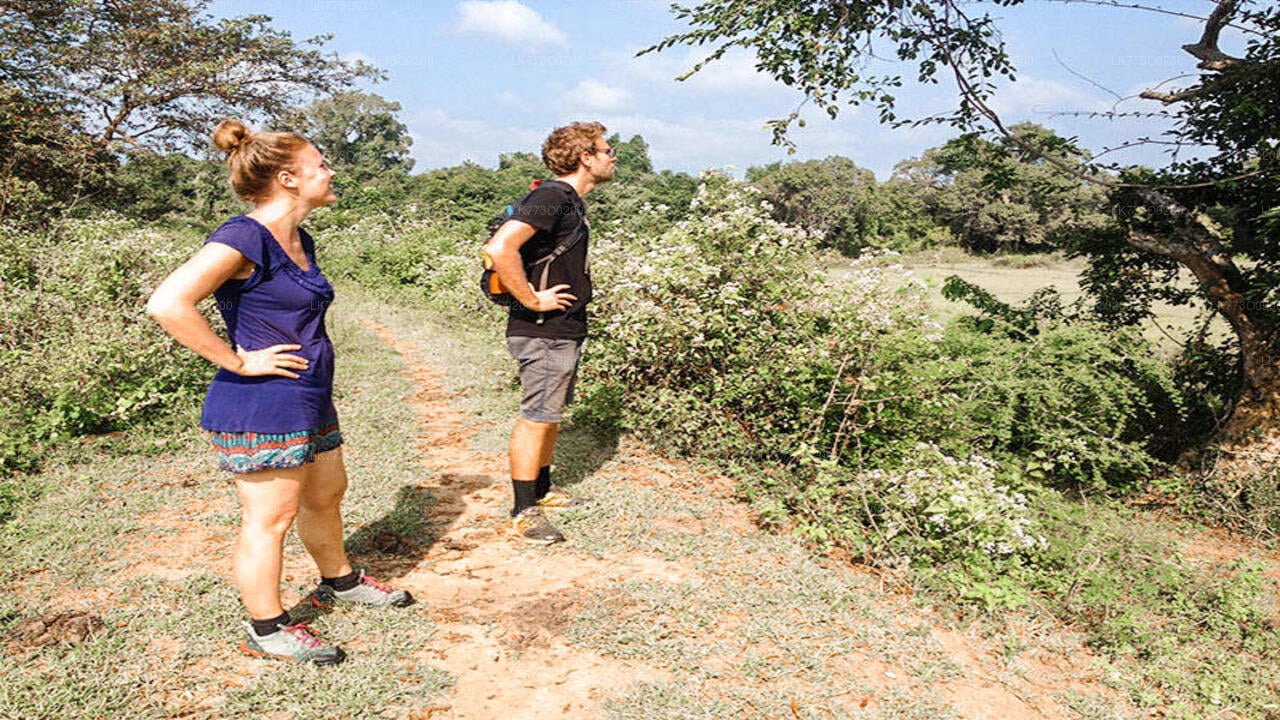
The most recognisable feature is a narrow spiral tower built to resemble a stupa, which visitors can climb for panoramic views over the Kandy valley and surrounding tea-covered ridges. The ascent is steep and the staircase narrow, but the reward on a clear day is a 360-degree view that stretches from the central highlands toward the coast on the horizon. A network of nature trails through the surrounding biodiversity zone makes Ambuluwawa worth more than a quick stop.
What do we know about Gampola's prehistoric past?
Gampola's recorded history tends to overshadow an equally intriguing prehistoric dimension. The region's earliest archaeological attention dates to the 1880s, when collectors including E. Ernest Green documented stone artefacts from sites around Nawalapitiya and Peradeniya, both close to Gampola. Around the same time, the Indian geologist Robert Bruce Foote surveyed the Atgalle hill near Gampola, recovering lithic material he later sent to the Madras Museum, catalogued as Neolithic stone tools from Sri Lanka.
More recent scholarship by Siran Deraniyagala placed the Gampola area within a classified prehistoric eco-zone — specifically Zone D2, part of the wet zone below 900 metres — identified as having significant potential for prehistoric finds. The area remains comparatively understudied relative to other Sri Lankan regions, and ongoing archaeological interest suggests more may yet be uncovered.
How do I get to Gampola from Kandy or Colombo?
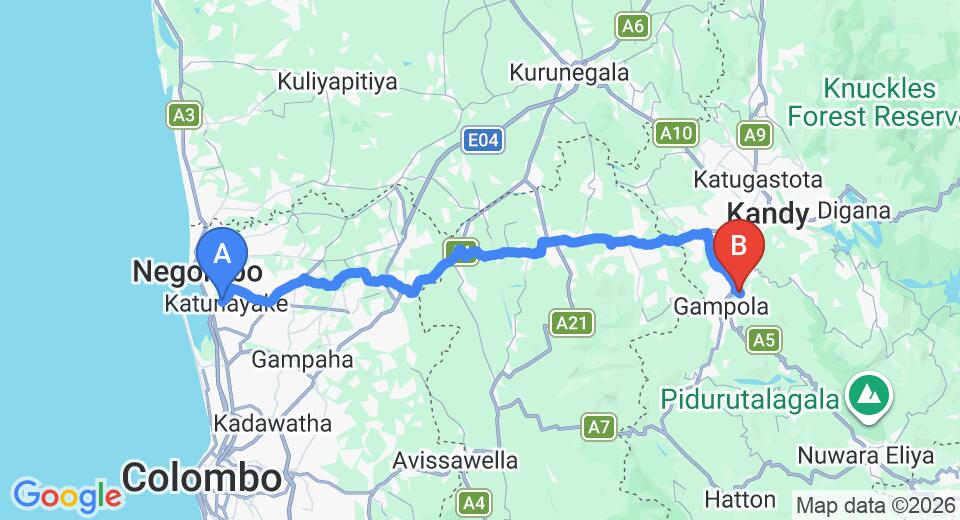
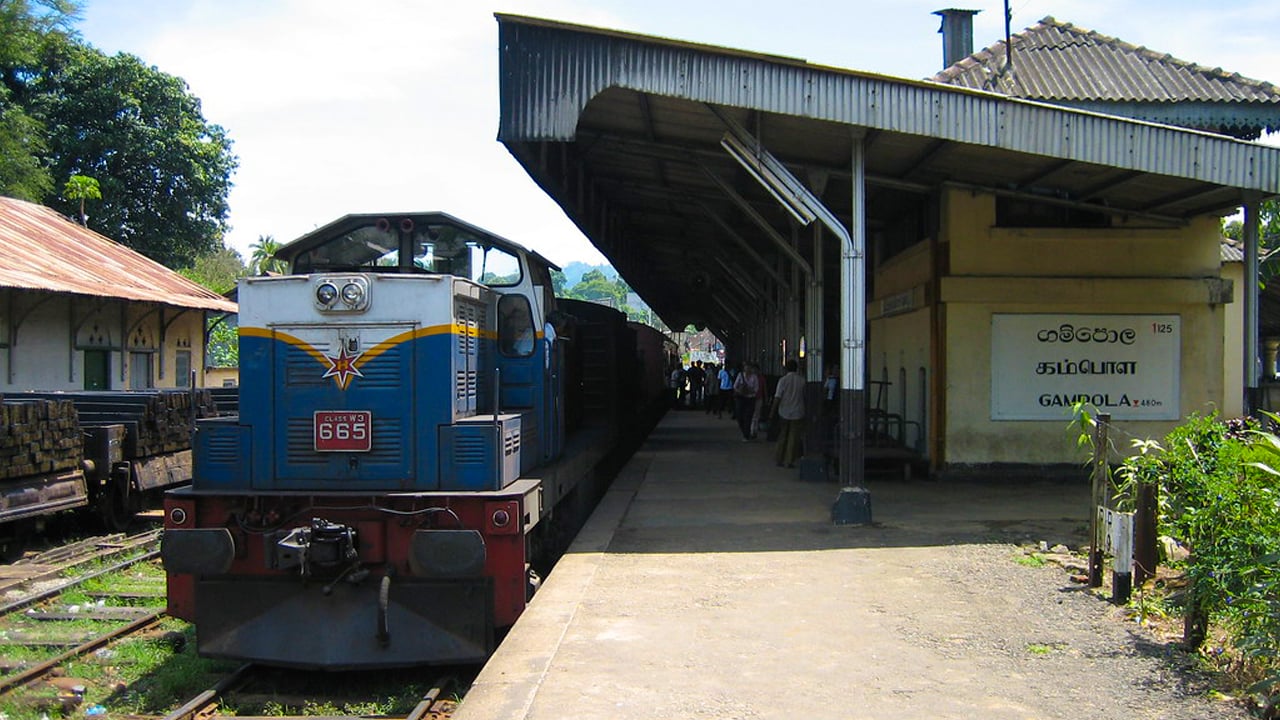
Gampola is approximately 20 km south of Kandy along the A5 highway toward Nuwara Eliya, making it an easy addition to any itinerary passing through the hill country. Trains on the Colombo–Kandy–Badulla line stop at Gampola station, and the scenic rail approach through the highlands is a draw in itself. From Colombo, the journey by road typically takes around two and a half to three hours depending on traffic through the Kadugannawa pass. Private transfers from Colombo Bandaranaike International Airport to Gampola-area properties can be arranged in advance, which is the most comfortable option if you are arriving with luggage.
When is the best time to visit Gampola?
Because of its elevation, Gampola enjoys a mild climate year-round, rarely reaching the extremes of heat found on the coast or the deep cold of the highest peaks. The driest and most settled weather in the central highlands typically falls between December and April, making those months the most reliable for temple visits and hiking on Ambuluwawa. The inter-monsoon months of October and November bring heavier rainfall but also lush green landscapes and far fewer crowds at the temples. The Esala Perahera Festival in nearby Kandy, usually held in July or August, makes that period a particularly lively time to base yourself in this part of the country.
What else is worth seeing around Gampola?
The town itself is a working highland market centre rather than a resort destination, which gives it an authenticity that more tourist-oriented stops can lack. The weekly market draws growers from the surrounding estates. Tea gardens fringe the town on several sides — the area sits within Sri Lanka's premier tea-producing belt, and visitors interested in understanding the crop can visit nearby estates. The Bluefield Tea Gardens offer a structured introduction to how Ceylon tea is grown, plucked, and processed.
Gampola also serves as a practical base for day trips to Horton Plains National Park, whose plateau and World's End escarpment are roughly an hour and a half to the south, as well as to the cloud forests and hiking terrain above Nuwara Eliya.