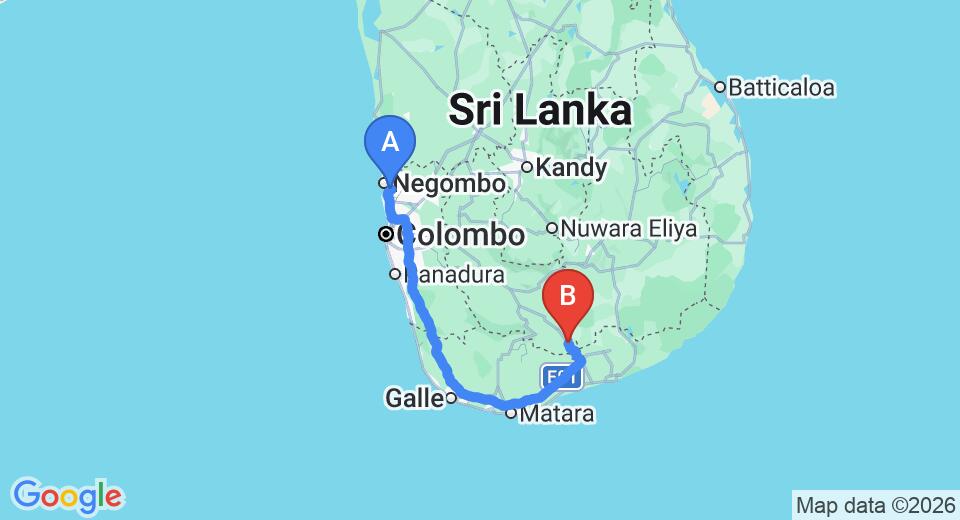

Embilipitiya is a mid-sized town in the Ratnapura District of Sabaragamuwa Province, sitting roughly 177 kilometres southeast of Colombo. Positioned where the lowland dry zone meets the edge of Sri Lanka's hill country, it draws a steady stream of visitors who use it as a base for the Ridiyagama Safari Park and the Udawalawe National Park corridor, while locals know it as a practical agricultural and commercial hub with genuine community character.
What is Embilipitiya known for?
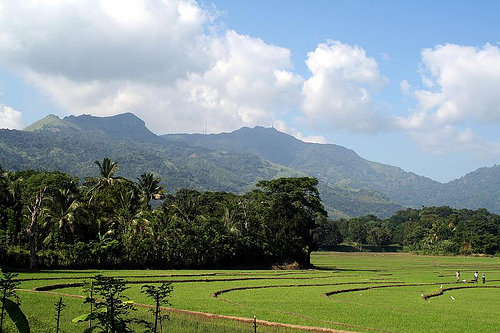
The town's identity is shaped by three things: farming, wildlife tourism, and its role as a service centre for the surrounding villages. Paddy cultivation dominates the agricultural landscape, supplemented by coconut plantations and market gardens that supply produce across the district. The weekly fair — where farmers, craftspeople, and traders converge — gives the town centre a rhythm that larger cities rarely replicate.
Beyond the fields, Embilipitiya has become increasingly relevant to wildlife-focused itineraries. Two major natural attractions sit within easy reach, and infrastructure around them has grown accordingly over the past decade.
What can you see and do around Embilipitiya?
Ridiyagama Safari Park
The Ridiyagama Safari Park is the town's flagship visitor attraction. Managed as a zoological and conservation facility, it houses elephants, deer, crocodiles, and a wide variety of bird species across a substantial area of dry-zone scrub and open grassland. Unlike Udawalawe, where sightings depend on chance, the safari park offers a more structured wildlife experience — useful for families or visitors with limited time. It is best visited in the cooler morning hours.
Weheragala Reservoir
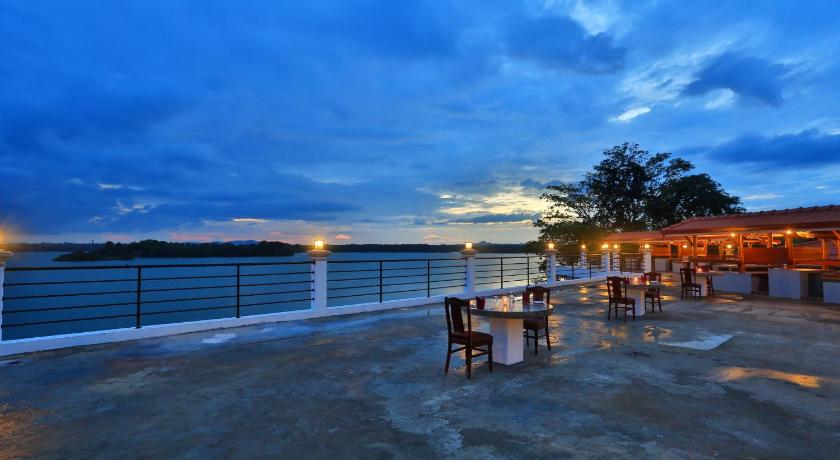
A few kilometres from the town centre, the Weheragala Reservoir is a large irrigation tank surrounded by flat, open countryside. Fishing is permitted in designated areas, and the bund road provides a pleasant early-morning walk with views across the water. Local families use the reservoir edges for picnics, particularly on weekends and public holidays.
Maha Saman Devalaya
Religious life in Embilipitiya centres on the Maha Saman Devalaya, a Buddhist-Hindu shrine dedicated to the guardian deity Saman, associated with Sri Pada (Adam's Peak). The devalaya holds periodic perahera processions and draws devotees from across the region, particularly during auspicious calendar days. Visitors are welcome but should dress conservatively and observe temple customs.
Gateway to Udawalawe
Embilipitiya sits roughly 20 kilometres northwest of the Udawalawe National Park entrance, making it a practical overnight stop for travellers on a southern or hill-country circuit. Accommodation options here tend to be quieter and more affordable than those immediately adjacent to the park gate, and the road connections are straightforward.
How do I get to Embilipitiya from Colombo?
The most direct road route from Colombo follows the Southern Expressway (E01) toward Ratnapura, then continues via the A18 through Pelmadulla toward Embilipitiya — a journey of around three to four hours depending on traffic. An alternative route via Wellawaya is longer but connects travellers arriving from the east or from the Cultural Triangle.
Private transfers from Bandaranaike International Airport are the most convenient option for international visitors, eliminating the need for multiple connections across an unfamiliar road network. Lakpura operates direct transfers between the airport and several Embilipitiya properties.
When is the best time to visit Embilipitiya?
Embilipitiya falls within the dry zone, so the most comfortable visiting period is the dry season from roughly May to September, when rainfall is minimal and roads are reliable. Temperatures remain warm year-round, typically between 27°C and 34°C, so early-morning activity is advisable for outdoor excursions. The inter-monsoonal periods (October–November and March–April) bring intermittent rain but rarely disrupt travel significantly.
Where should I stay in Embilipitiya?
Accommodation in Embilipitiya ranges from comfortable guesthouses to nature-focused camps on the edge of the dry-zone landscape. Properties close to the Weheragala Reservoir offer a quieter alternative to the town centre, while camp-style lodges appeal to travellers prioritising proximity to safari activities. Booking in advance is advisable during Sri Lankan school holidays and long weekends, when domestic tourism peaks.
| Detail | Information |
|---|---|
| District | Ratnapura |
| Province | Sabaragamuwa |
| Distance from Colombo | Around 177 km |
| Nearest major national park | Udawalawe (~20 km) |
| Climate zone | Dry zone lowlands |
| Primary language | Sinhala |
What is the food scene like in Embilipitiya?
The town has a functional range of local restaurants and small hotels serving Sri Lankan rice-and-curry meals, short eats, and rotis. Freshwater fish from local reservoirs occasionally features on menus. International cuisine is limited, so visitors with specific dietary requirements should plan ahead or communicate clearly with their accommodation. The daily market and weekly fair are good places to pick up seasonal fruit, including mangoes and woodapples, which are widely grown in the surrounding area.
Is Embilipitiya suitable as a base for a wider southern circuit?
Yes — Embilipitiya works well as a mid-point on a circuit linking Colombo, the hill country, and the southern coast. From here, travellers can reach Udawalawe National Park, continue toward Tissamaharama and Yala, or loop back through Ratnapura and the gem-trading towns of the Sabaragamuwa highlands. The town's central position and improving road links make it a practical overnight stop rather than just a transit point.
Nearby places
8 places within about 25 km, nearest first.
- Chandrika wawaunder 1 km
- Walawe River9 km
- Weheragala Entrance12 km
- Feeding Baby Elephants13 km
- Elephant Transit Home15 km
- Udawalawe Reservoir15 km
- Naturalist at Udawalawe National Park16 km
- Udawalawe National Park16 km