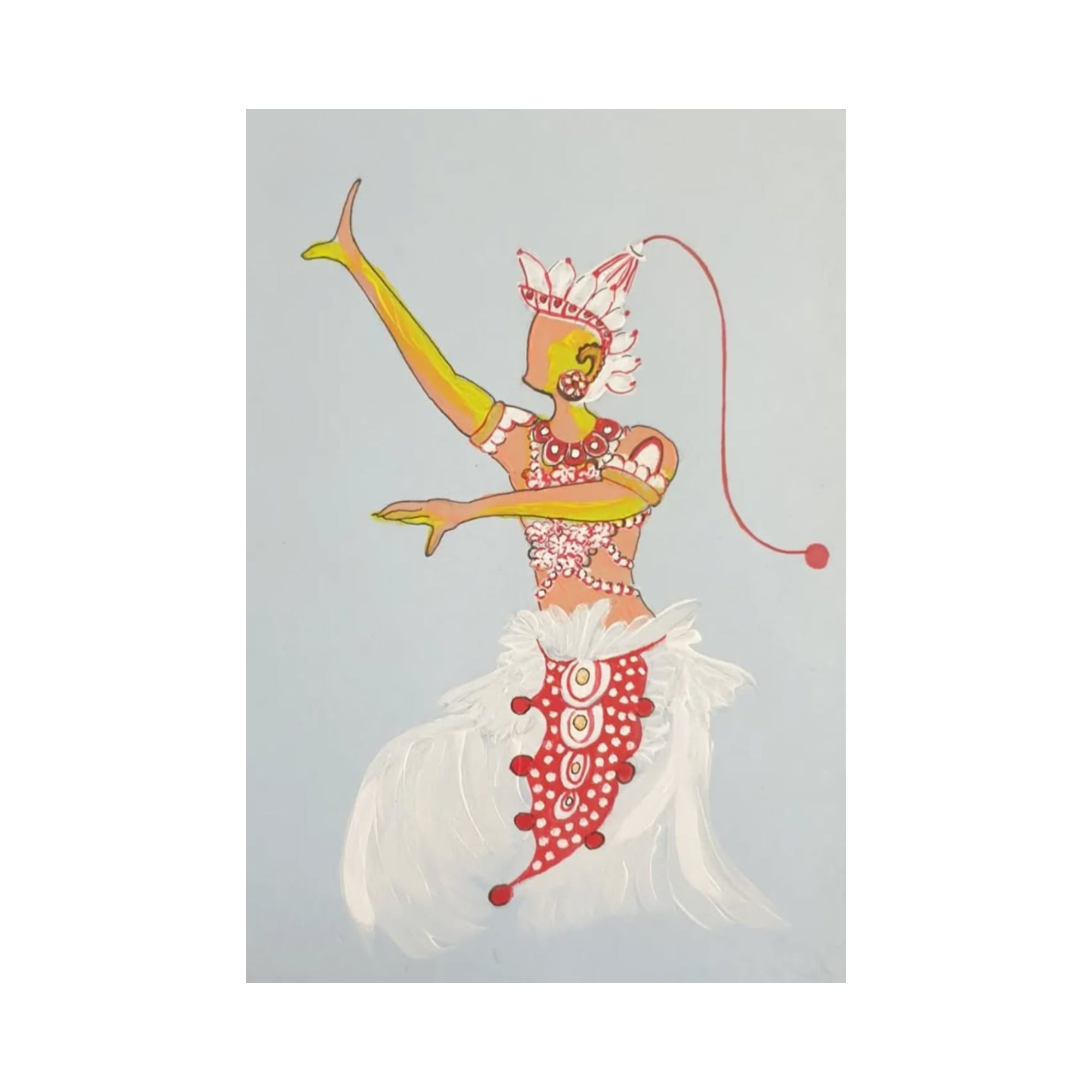
Tucked beside the sacred precinct of Kandy's lake, the Kandyan Art Association and Cultural Centre is one of Sri Lanka's most enduring cultural institutions. Founded in 1882 and housed partly in a royal-era building that predates British rule, it has spent well over a century keeping traditional Kandyan arts alive — weaving, wood carving, lacquerwork, jewellery making, drumming, and classical dance — at a time when market forces and colonial disruption made those crafts genuinely precarious.
Why was the Kandyan Art Association founded?
Before 1815, the artists and craftsmen of the Kandyan Kingdom operated through tightly organised guilds. Knowledge passed from parent to child; marriages commonly took place within the same guild to guard trade secrets; and every guild worked under royal patronage. When the fall of the Kandyan Kingdom and the subsequent Kandyan Convention of 1815 dissolved the royal household, that patronage vanished almost overnight. Most guilds disbanded, leaving skilled craftsmen without a livelihood or a market.
The association was established in 1882 by Sir John Frederick Dickson, the British Government Agent for the Central Province, who gathered surviving traditional artists and craftsmen under one roof. It began modestly, operating from a single room in the Government Agent's Office in Kandy.
What is the history of the building itself?
The association has occupied three separate premises over its history, each with its own layered past. In 1904 it moved to the Palle Vahala (Lower Palace), the residence where the Kandyan king's family had lived — a building now home to the National Museum of Kandy. In 1924 it relocated again to the Kunam Maduwa, or House of the Palanquins, a structure originally built in the 16th century by King Vimaladharmasuriya to shelter the royal court's palanquins. During the British period the Kunam Maduwa was converted into a military hospital; by the time the association moved in, it had already lived several lives.
The association was incorporated as a public trust in 1919 and today is administered by the Government Agent of Kandy District alongside a management committee, giving it a degree of governmental oversight that has helped sustain it through difficult decades.
What is the Cultural Centre and theatre?
To mark its centenary in 1982, the association undertook a major expansion: a new cultural centre and theatre designed by Minnette de Silva, the first Sri Lankan woman to qualify as an architect. Completed in August 1984, the complex added a central theatre seating around 1,500 people, together with galleries and studio spaces that sit alongside the original heritage building.
The theatre suffered serious damage in the 1998 bomb attack on the nearby Temple of the Tooth precinct carried out by the Liberation Tigers of Tamil Eelam. Restoration came in 2005, funded by a government grant of 7 million LKR secured through the efforts of the late Lakshman Kadirgamar, then Minister of Foreign Affairs.
What can visitors see and do at the Cultural Centre?
The centre offers two distinct draws for visitors: a daily live performance and a working craft sales gallery.
- Kandyan dance and music performance: A one-hour showcase is held each evening in the auditorium. Performers are drawn from local families and graduates of Sri Lanka's traditional dancing institutions. The programme typically covers the principal forms of Kandyan dance — Ves, Naiyandi, Vannam, and fire-walking sequences — accompanied by live drumming on the traditional geta bera drum.
- Craft sales centre: The ground-floor gallery displays and sells handicrafts made by association members. Items include hand-woven textiles, lacquerware, carved wooden masks, silver jewellery, and brasswork — all produced by craftsmen working in the tradition the association was founded to protect. Prices are generally fair and the provenance is documented, making this a more reliable place to buy than a roadside stall.
- Heritage architecture: The Kunam Maduwa itself is worth examining closely. Its roof structure and proportions reflect the vernacular palatial style of the Kandyan period, distinct from the lowland Sinhalese and colonial styles seen elsewhere in Sri Lanka.
How do I get to the Kandyan Art Association from the city centre?
The Cultural Centre stands on Sangaraja Mawatha, a short walk from Kandy's main commercial street and the lakeside promenade. It is within easy walking distance of the Temple of the Tooth Relic and the Kandy National Museum. Tuk-tuks from the Kandy clock tower reach the entrance in under five minutes. Parking space is limited, so arriving on foot or by three-wheeler is more practical than driving. For orientation across the wider city, the Kandy Tourist Information Center can provide maps and current performance schedules.
When is the best time to visit?
The Cultural Centre is open throughout the year. The evening performance schedule generally runs daily, though timings can shift slightly during public holidays or religious observances — it is worth confirming locally on the day. If your trip coincides with July or August, the city transforms for the Esala Perahera Festival, when Kandyan dance and drumming move from the stage to the streets in one of Asia's largest religious processions. Attending both the festival and the Cultural Centre performance during that period gives a useful contrast between the ceremonial public tradition and the more intimate studio setting.
Is the Kandyan Art Association relevant to understanding Sri Lanka's broader craft heritage?
Few institutions in Sri Lanka can match the association's unbroken record of active craft preservation since the 19th century. Many of the artisans whose work appears in national museums, at state ceremonies, and in export galleries trace their training or professional identity back to this organisation. For travellers on a Kandy city tour who want more than a standard temple visit, the Cultural Centre provides a grounded, non-commercial introduction to the skills that shaped Kandyan material culture for centuries.
The association also remains a functioning body, not a museum piece. Craftsmen here are still producing, teaching, and selling within the same walls where their predecessors once worked under royal patronage — a continuity that is quietly remarkable.
Nearby places
13 places within about 25 km, nearest first.
- Kandy Railway Stationunder 1 km
- Kandy View Pointunder 1 km
- Bogambara Prisonunder 1 km
- Bambaragala Templeunder 1 km
- Central Provinceunder 1 km
- Maha Wahalkadaunder 1 km
- Oak Ray Wood Carving Centerunder 1 km
- Ranawana Purana Rajamaha Viharayaunder 1 km
- Bahirawakanda Vihara Buddha Statueunder 1 km
- Asgiri Viharaya - Adahana Maluwa Gedige Viharayaunder 1 km
- Asgiriya Chapterunder 1 km
- Asgiriya Maha Viharayaunder 1 km
- Asgiriya Maha Viharaunder 1 km
Related reading
5 pages on closely related subjects.